
A solar water pump supplier should help an installer prove that the delivered system works at the real duty point. A pump that starts in sunlight can still miss the required daily water volume, run outside its efficient range, or stop because the PV input does not match the controller. These failures often appear only after the installer has left the site.
For African borehole, irrigation and community-water projects, commissioning must connect four facts: the water source, total dynamic head, required flow and electrical operating window. The checklist below helps installers verify those facts before handover.
The World Bank solar pumping overview identifies water demand, storage, head, panel location and solar irradiation as core design inputs. Commissioning should confirm that the assumptions used in the quotation still match the installed site.
Why Solar Water Pump Commissioning Must Go Beyond a Start Test
A short no-load or open-discharge test does not prove project performance. Water level falls while a borehole is pumping. Pipe friction rises with flow, distance and fittings. Meanwhile, module voltage changes with temperature, and available PV power changes with irradiance. Therefore, the installer needs hydraulic and electrical readings under stable operation.
The current WHC product library illustrates why model selection matters. Its submersible-pump catalogue includes examples from 600 W to 2,200 W, with different flow-and-head curves. Its self-priming surface-pump range includes 900 W to 1,500 W examples. Maximum flow and maximum head are opposite ends of a pump curve, so they must never be treated as simultaneous performance.
| Decision | Submersible Pump | Surface or Self-Priming Pump |
|---|---|---|
| Typical water source | Deep borehole or well, with the pump below the operating water level | Pond, tank, canal or shallow source where suction conditions remain within the pump limit |
| Critical site input | Dynamic water level, installation depth, cable length and borehole diameter | Suction lift, airtight suction pipe, priming behavior and inlet losses |
| Commissioning risk | Dry running, cable voltage drop, incorrect suspension or operation above the pump | Air leakage, excessive suction lift, blocked inlet or loss of prime |
| Best acceptance evidence | Stable dynamic level, measured flow, discharge pressure and controller readings | Measured flow, suction stability, discharge head and restart performance |
Start With Borehole Depth, Water Demand and Total Dynamic Head
Record Static and Dynamic Water Levels
Static water level is the depth before pumping. Dynamic water level is the depth after the pump has operated long enough for the well to stabilize. Select and test the pump against the dynamic level, not only the static level. Also keep the pump submerged according to its manual and above sediment that could restrict cooling or damage the inlet.
Calculate the Real Duty Head
Total dynamic head normally combines vertical lift, delivery-tank elevation, pipeline friction and required outlet pressure. The WHC catalogue uses a simplified site illustration with suction or source depth, discharge height and a pipeline allowance. For an EPC design, replace the allowance with a calculation based on pipe diameter, length, fittings and target flow.
The FAO guidance on solar water lifting also stresses accurate array and pump sizing for the required duty. This is important because an oversized quotation adds cost, while an undersized system may fail during the critical water-demand period.
Measure Flow at a Defined Condition
Do not record “good flow” as the result. Use a calibrated flow meter or a measured-volume-and-time method. Record the stabilized flow together with discharge pressure, dynamic water level and solar conditions. This creates evidence that the measured point belongs on the expected pump curve.
Check the Solar Water Pump, Controller and PV Array as One System
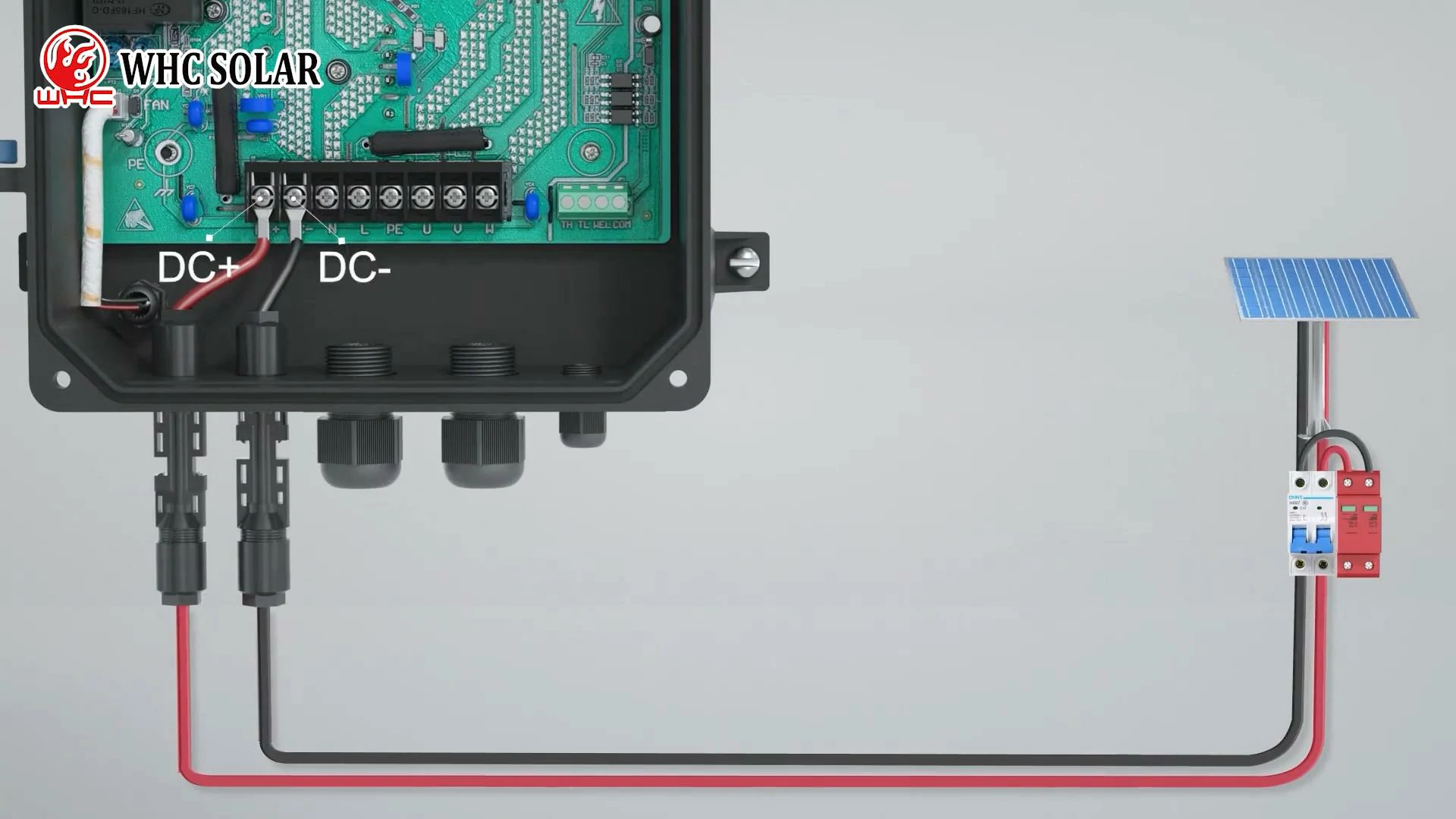
The pump nameplate, controller input range and PV string must agree. Current WHC DC controller documentation covers pump voltage classes from 12 V to 110 V, with model-specific MPPT windows. WHC also provides VFD-based solar pump inverter options for AC pumps. The installer must use the datasheet for the supplied model rather than copy a string design from another project.
Before energizing, confirm PV open-circuit voltage stays below the controller limit under the site’s lowest expected module temperature. Next, confirm operating voltage can remain inside the MPPT range when the pump runs. Check polarity, grounding, disconnects and cable terminations. Long pump cables also require a verified voltage-drop calculation and suitable conductor size.
During operation, compare PV voltage, current, pump speed and output flow. A controller may show normal voltage while inadequate array power prevents the pump from reaching its duty point. Conversely, excessive string voltage can damage equipment. Installers can review the available WHC solar water pump range before requesting the final pump curve and controller-matching sheet.
Test Dry-Run Protection and Other Shutdown Functions
Dry-run protection should be tested, not assumed. WHC manuals describe water-level inputs and automatic protection logic for supported controllers. Some models stop after detecting water shortage and attempt a restart after a delay. However, the sensing method, delay and reset behavior are model dependent.
Simulate the approved test condition without allowing the pump to run dry. Confirm the controller stops the motor, displays or logs the expected status, and returns to service only under the intended reset condition. Then test the tank-full input, reverse-polarity alarm where applicable, low-power behavior and any overcurrent or phase-related protection specified for the supplied system.
| Priority | Commissioning Check | Evidence to Keep | Do Not Accept |
|---|---|---|---|
| 1 | Hydraulic duty point | Dynamic level, flow, pressure and operating time | A brief start test with no measured flow |
| 2 | Electrical match | PV voltage/current, controller range and nameplate photos | Unverified PV string voltage or mixed wiring assumptions |
| 3 | Protection functions | Dry-run, tank-full and fault-reset test results | Protection claimed only from a brochure |
| 4 | Handover package | Settings, wiring diagram, serial numbers, photos and baseline readings | A verbal handover with no recorded settings |
Three Typical African Commissioning Scenarios
Deep Borehole Feeding an Elevated Community Tank
The installer should test at the stabilized borehole level and at the actual tank elevation. Cable length, pipe friction and low-water sensing deserve priority. The team should also confirm that the tank-full signal stops the system without repeated cycling.
Surface Pump Drawing From a Farm Reservoir
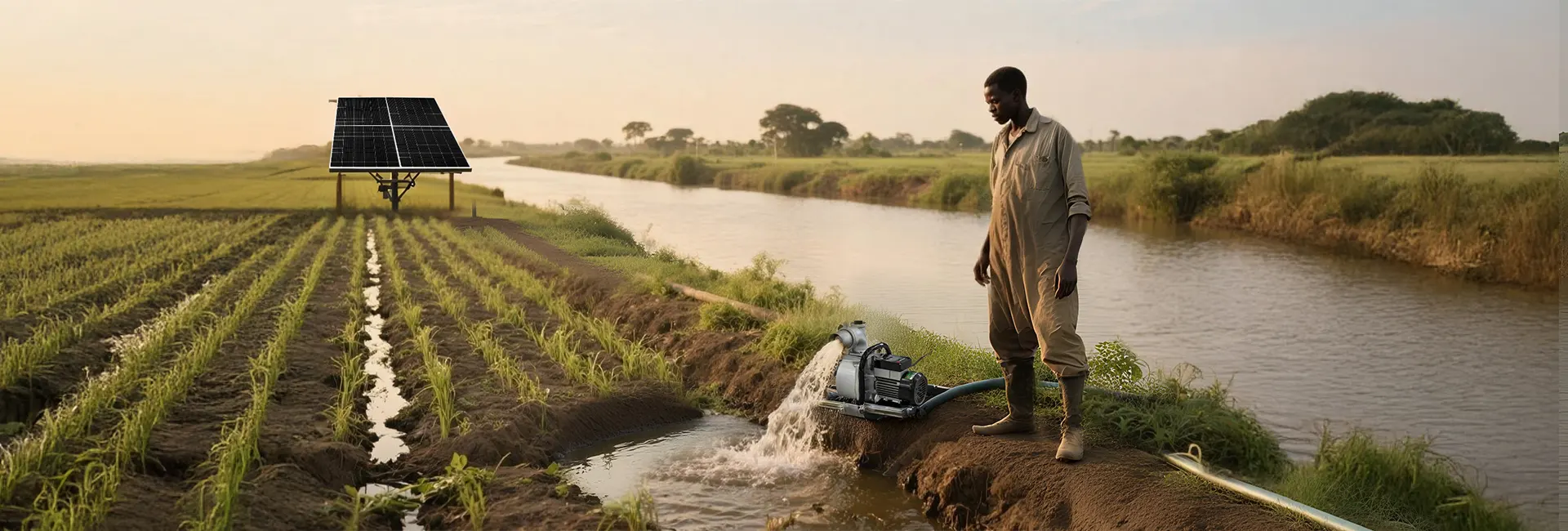
The main risks are suction losses, air leakage and inlet blockage. Test the pump with the planned suction pipe and filter. A solar surface pump should be selected from its curve, not from motor wattage alone.
Seasonal Irrigation Project With Changing Water Demand
The acceptance test should use the design irrigation zone and delivery pressure. Seasonal demand and solar resource must also be considered. IRENA’s solar pumping guidance highlights the connection between water, energy and agricultural planning. The project owner should therefore review water-use controls as well as pump output.

What a Solar Water Pump Supplier Should Provide Before Handover
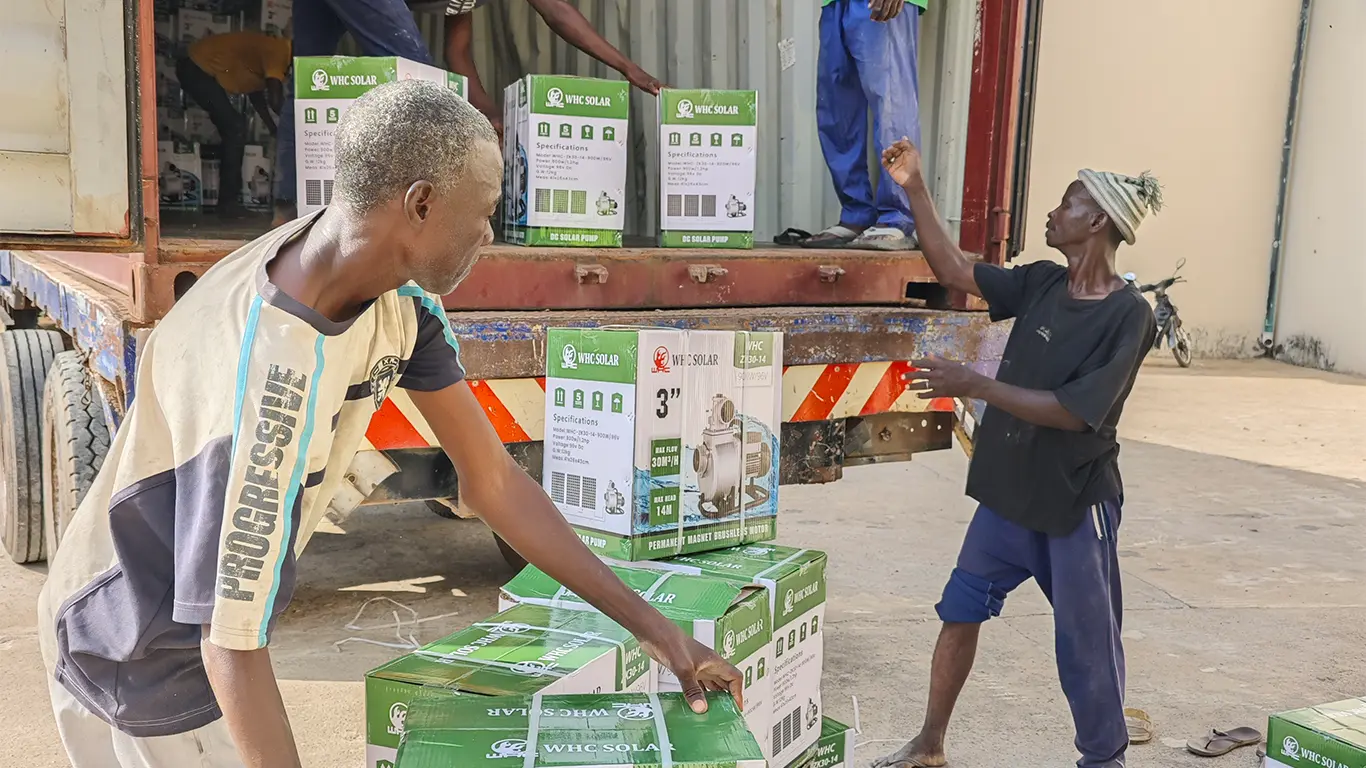
Ask for the model-specific pump curve, controller datasheet, approved PV string, wiring diagram, alarm list and commissioning form. The supplier should also identify replaceable service parts and the evidence required for technical support. These documents make remote troubleshooting faster after the installation team leaves.
WHC Solar maintains product, testing and project resources for distributors and EPC teams. Buyers can review its quality-control process and relevant solar project cases. For a quotation, provide the water source, dynamic level, total head, daily water demand, pipe route, available solar window and destination market.
Conclusion: Commission the Duty Point, Not Just the Pump
A reliable solar water pump project is accepted with measured hydraulic performance, a verified MPPT operating window and tested protection functions. Choosing a solar water pump supplier should therefore include documentation, commissioning support and after-sales response, not only pump wattage and price.
Send the site data and required water output to WHC Solar’s project team to request a model-matching review and B2B quotation.
Frequently Asked Questions
What borehole depth should an installer use for pump selection?
Use the dynamic pumping water level, delivery elevation, friction loss and required pressure. Borehole depth alone does not define the operating head.
Can maximum flow and maximum head occur at the same time?
No. They are different points on the pump curve. Select a model that delivers the required flow at the project’s calculated total dynamic head.
How should an installer verify MPPT matching?
Confirm the PV string’s cold open-circuit voltage, expected operating voltage and available power against the exact controller datasheet. Then record operating values while pumping.
Should a submersible pump be tested outside the water?
No. The WHC DC pump manual requires the pump to remain under water during testing. Follow the supplied model manual and use an approved safe test method.
Which records should be included in the project handover?
Keep serial numbers, settings, wiring diagrams, nameplate photos, PV readings, dynamic water level, flow, pressure, protection tests and signed acceptance results.
Request a Solar Water Pump Configuration
WHC Solar supports distributors, installers and EPC contractors with pump selection, controller matching, PV configuration and commissioning documentation. Submit your borehole data, target flow, total head and order quantity to receive a project-specific configuration and quotation.