
For African distributors, choosing a solar street light supplier is not only about buying a lamp body. A street lighting order usually becomes a complete selling package: LED light, solar panel, lithium battery, controller, pole, bracket, cable, carton, spare parts and installation guidance. If one part is mismatched, the distributor may face weak lighting, short backup time, battery complaints, controller failure or difficult after-sales service after the goods have already entered the local market.
This solar street light supplier guide is written for distributors, wholesalers and solar product dealers serving Africa, West Africa, Central Africa and Sub-Saharan Africa. It explains how to select a solar street light complete set for road lighting, village projects, community areas, school roads and small municipal projects. It also shows what information to prepare before asking WHC Solar for a B2B quotation.
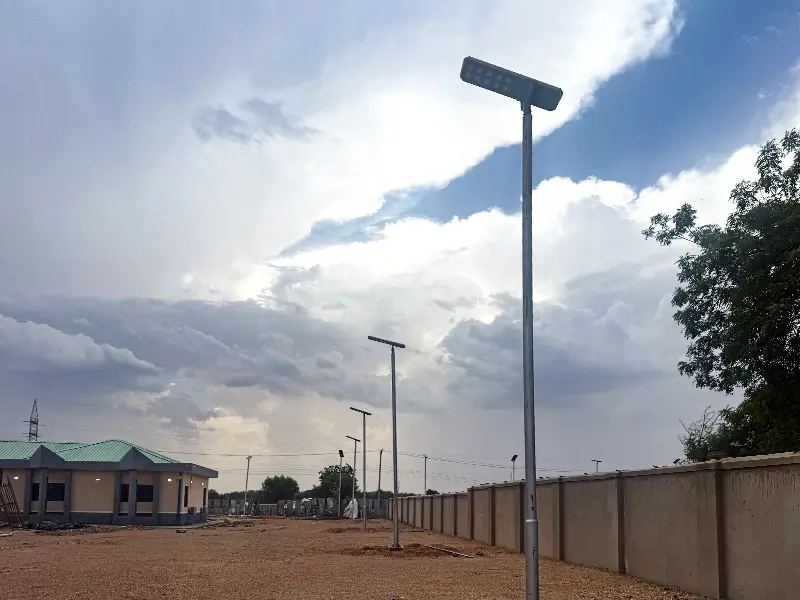
Why Distributors Should Buy Solar Street Lights as Complete Sets
Many street light complaints start before installation. A buyer may order a bright LED lamp but choose a small panel. Another buyer may request long working time but select a battery that cannot support rainy days. A contractor may install the wrong pole height for the road width. These mistakes are expensive for distributors because after-sales service often happens far from the supplier.
A complete set reduces that risk. A reliable solar street light supplier can match the LED power, solar panel, battery capacity, controller setting, pole height and installation accessories before shipment. This is especially important in African markets where projects may be installed in rural roads, public spaces, school entrances, community compounds, parking areas or off-grid village roads.
The IEA Africa Energy Outlook 2022 notes that mini-grids and stand-alone systems are important options for rural electricity access. For lighting projects, this supports the demand for off-grid solar lighting products that can operate without relying on unstable grid power.
Distributors can start by reviewing WHC Solar’s solar street light products and solar lighting product range before confirming the final order configuration.
What a Solar Street Light Complete Set Includes
A complete solar street light supplier package should include all parts needed for installation and operation. For distributor stock planning, the key is to make the package easy to sell, easy to explain and easy to install for local customers.
LED Light Source
The LED power affects brightness, energy consumption and battery sizing. A higher-wattage LED is not always the better choice. The distributor should match LED power with road width, installation height, lighting hours and the buyer’s budget.
Solar Panel
The solar panel charges the battery during the day. In markets with rainy seasons or dusty conditions, the panel should not be selected only by the minimum theoretical value. The buyer should allow enough charging capacity for local sunlight conditions and maintenance habits.
Lithium Battery
The battery decides night working time and backup ability. WHC Solar’s street light pages describe the use of LiFePO4 lithium batteries in solar street light products. For B2B orders, distributors should check battery chemistry, capacity, protection design, replacement method and whether the battery is built into the lamp or separated in a box.
Controller
The controller manages charging, discharging and lighting modes. It should protect the battery from over-charge and over-discharge, and it should support practical working modes for local projects. For example, some roads need full brightness at nightfall and lower brightness after midnight.
Pole and Mounting Accessories
The pole height, arm design, bracket and foundation affect lighting coverage and safety. A good solar street light supplier should help the buyer match the pole to the road type, wind environment, lamp weight and installation method.
All-in-One, Split or Project-Type Solar Street Light?
Distributors should not stock only one structure for all customers. Different buyers need different designs. WHC Solar’s solar lighting solutions page describes both all-in-one and split solar street light options, which are useful for different sales channels and project needs.
| Type | Best-Fit Buyer | Distributor Buying Logic | Key Risk to Check |
|---|---|---|---|
| All-in-one solar street light | Retail dealers, small contractors, community lighting buyers | Easy installation, compact package, simple stock management | Battery and panel size must match the promised working time. |
| Split solar street light | Road projects, school roads, municipal contractors, larger lighting areas | More flexible panel and battery configuration for project demand | Installation quality, cable protection and pole structure must be checked. |
| Solar flood light | Compounds, farms, parking areas, security lighting, open yards | Useful for distributors serving non-road lighting demand | Beam angle and installation position must fit the lighting area. |
How to Match Battery, Panel, Controller and Pole
The safest configuration method starts from the application, not from the lamp wattage. The distributor should ask where the light will be installed, how many hours it must work, how many rainy days the buyer expects, and whether the order is for stock, tender supply or a named project.
Step 1: Confirm the Lighting Area
A narrow village road, a school entrance, a market street and a parking compound do not need the same lighting design. The buyer should confirm road width, pole spacing, installation height and required brightness. If the buyer has project drawings or photos, they should be sent before quotation.
Step 2: Decide Working Hours and Backup Days
Working time affects battery and panel selection. A light that works for 6 hours per night needs a different battery from one that works all night. In West African and Central African markets, rainy season planning is important. The configuration should include a realistic backup target instead of a vague promise.
Step 3: Match Panel Charging Capacity
The solar panel should be large enough to recharge the battery under normal local sunlight. A small panel may reduce the upfront cost but can create weak night lighting after cloudy days. For distributor stock, it is better to have a clear panel-battery matching table for each product series.
Step 4: Select Controller Mode
The controller should support practical lighting modes such as dusk-to-dawn operation, timed dimming or motion-assisted energy saving when available. Distributors should ask whether the controller settings are easy for local installers to understand.
Step 5: Match Pole Height and Installation Parts
For road lighting projects, the pole is part of the system. The wrong height or weak structure can reduce lighting performance and create safety risk. Before ordering, confirm pole height, arm design, foundation requirement, bracket and packaging method.
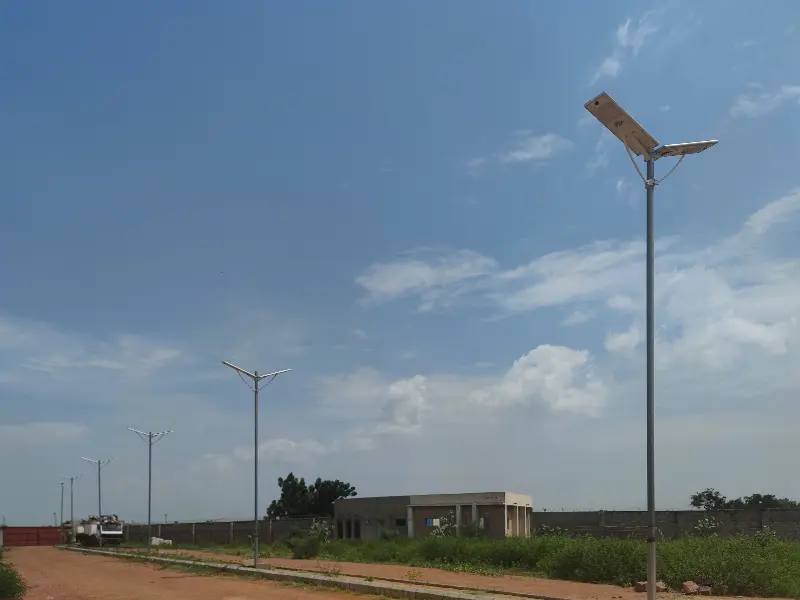
Typical African Distributor Scenarios
Village Road and Community Lighting
Village lighting buyers usually need reliable operation, simple installation and manageable price. Distributors can stock all-in-one models for easy sale, while keeping split models for customers who require stronger project customization.
School Roads and Public Facility Entrances
Schools, clinics, worship centers and public compounds often need safer lighting around gates, paths and parking areas. These buyers may care more about stable operation and after-sales support than the lowest unit price.
Municipal and Contractor Supply
For municipal contractors, the buyer may need a complete bill of materials, installation guidance, packing list and consistent batch quality. In this case, the distributor should work with a solar street light supplier that can support project configuration before shipment.
Supplier Screening Checklist for Distributors
The right supplier should help the distributor reduce complaint risk and improve repeat orders. Before placing a bulk order, check more than price.
| Supplier Check | What to Ask | Why It Matters for B2B Buyers |
|---|---|---|
| Product range | Can the supplier offer all-in-one, split and flood light options? | A wider range helps distributors serve retail, contractor and project customers. |
| Battery and panel matching | Is each model matched with suitable battery and solar panel capacity? | Mismatch causes short lighting time and after-sales complaints. |
| Outdoor protection | What waterproof and structural protection does the product use? | Street lights must handle rain, heat, dust and long outdoor exposure. |
| Batch consistency | Can the supplier keep model, packaging and accessories consistent? | Consistent batches reduce installation confusion and replacement problems. |
| Documentation | Can the supplier provide specification, packing list and installation guidance? | Clear documents help local sales teams and installers explain the product. |
Quality and Market Confidence
Low-quality lighting products can damage a distributor’s local reputation quickly. Lighting projects are visible every night, so a weak product becomes a public complaint. The Lighting Global quality assurance work explains why product quality and consumer confidence matter in the off-grid solar market.
The World Bank SDG 7 Atlas also shows the continuing electricity access gap in rural Sub-Saharan Africa. For distributors, this means solar lighting demand is not only about decoration. It is often linked to road safety, business hours, public facility access and off-grid community needs.
For WHC Solar, the correct sales angle is a full solar lighting solution. Buyers can compare WHC’s product pages, prepare their local project information and contact the team for a matched complete-set quotation.
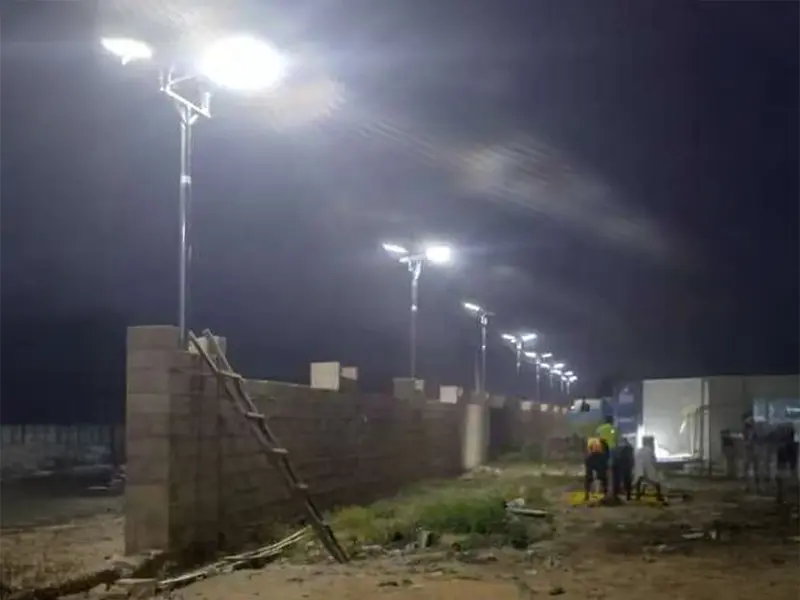
What to Prepare Before Asking for a Quotation
Before contacting a solar street light supplier, distributors should prepare the target market, order quantity, preferred light type, road or site photos, expected working hours, rainy-day backup target, pole requirement and packaging preference. If the order is for a tender or contractor project, share the project document or lighting requirement when possible.
WHC Solar’s contact page asks buyers to provide models and quantity. For faster quotation, include whether the order is for distributor stock, government supply, school road lighting, village lighting or a private compound project.
Conclusion
A solar street light complete set should be selected as a matched system, not as separate parts. African distributors need products that are easy to sell, easy to install and stable enough to protect local reputation. The right configuration starts with application scenario, lighting hours, backup days, battery capacity, panel charging ability, controller mode and pole design.
As a solar street light supplier for B2B buyers, WHC Solar can support distributors with product selection, complete-set configuration and quotation support for African lighting markets.
Contact WHC Solar to request a solar street light complete-set quotation for your target market.
FAQ
What should be included in a solar street light complete set?
A complete set should include the LED light, solar panel, battery, controller, pole or mounting bracket, installation accessories, cable, packing list and basic installation guidance.
Is an all-in-one solar street light better for distributors?
All-in-one models are easier to install and manage as stock, but split solar street lights may be better for project buyers who need stronger configuration flexibility.
How should distributors choose battery capacity?
Battery capacity should be selected according to LED power, working hours, backup days and local sunlight conditions. Do not choose the battery only by the lowest price.
Why does pole height matter in a solar street light order?
Pole height affects lighting coverage, road safety and installation stability. It should match road width, lamp power, bracket angle and local wind conditions.
What information should African distributors send to WHC Solar?
Send target market, order quantity, product type, required working hours, rainy-day backup target, installation site photos, pole requirements and any tender or project documents.