
Choosing the right hybrid solar inverter supplier is one of the most important decisions for African EPC contractors, solar installers, distributors, and project developers. In off-grid and unstable-grid markets, the inverter is not just a product. It decides how solar panels, batteries, grid power, and generators work together in real project conditions.
Across West Africa, Central Africa, and Sub-Saharan Africa, many hotels, schools, clinics, farms, shops, and small factories need reliable power because grid outages, voltage fluctuation, and diesel generator costs remain common challenges. The IEA Africa Energy Outlook highlights electricity access and reliable energy supply as major priorities across the region.
In our experience supporting African solar projects, many inverter problems do not come from the inverter alone. They come from wrong load calculation, weak battery matching, incorrect PV string design, or choosing a supplier that only sells units without project configuration support. This guide explains how to evaluate a hybrid solar inverter supplier for B2B projects and how to reduce procurement risk before bulk ordering.
Why African Projects Need the Right Hybrid Solar Inverter Supplier
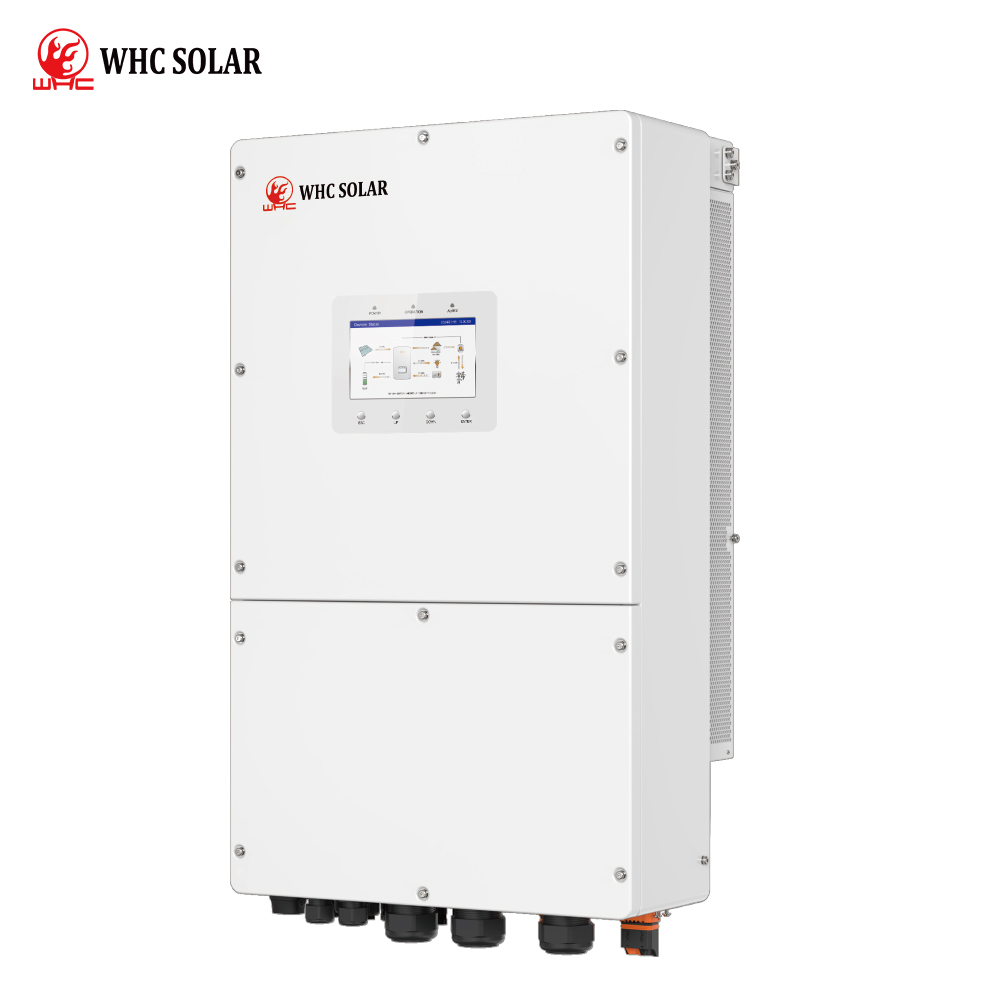
A hybrid inverter combines inverter, solar charger, and battery charger functions in one system. For African off-grid and hybrid projects, this matters because the system often needs to switch between solar power, battery storage, grid power, and sometimes diesel generator backup.
For a distributor or EPC contractor, the supplier decision should not stop at price and wattage. A reliable solar inverter supplier should help buyers confirm load type, inverter power, battery voltage, MPPT range, PV string design, communication needs, parallel function, and after-sales support.
WHC Solar product materials show that hybrid inverters are one of the company鈥檚 main solar inverter lines, with common residential and small project models from 1.2KW to 11KW. For larger projects, WHC also provides solar energy systems and commercial storage solutions. This makes the inverter topic naturally connected with full system configuration, not only standalone product sourcing.
Hybrid Inverter vs Low Frequency Inverter vs ESS Inverter
Before choosing a hybrid solar inverter supplier, buyers should understand which inverter type fits the project. In our project discussions, the wrong inverter type is one of the fastest ways to create installation problems.
| Inverter Type | Best Fit | Buyer Should Check | Procurement Risk |
|---|---|---|---|
| Hybrid inverter | Off-grid homes, shops, clinics, small hotels, and small commercial systems | MPPT voltage, battery communication, parallel function, and output priority | Undersizing load or ignoring battery compatibility |
| Low frequency inverter | Motor loads such as pumps, refrigerators, air conditioners, and heavy appliances | Surge capacity, transformer design, rated load, and system voltage | Choosing high-frequency models for heavy motor loads |
| ESS inverter | C&I storage, microgrid, three-phase projects, peak shaving, and backup power | PCS/EMS function, grid/off-grid switching, battery voltage, and monitoring | Buying products without project-level integration support |
For many African solar installers, a hybrid inverter is the most flexible choice for off-grid and unstable-grid projects. However, for factories, large hotels, government buildings, or energy storage projects, an ESS inverter or complete solar energy system may be more suitable.
Key Technical Factors EPC Buyers Should Check Before Ordering
1. Load Calculation and the 70% Rated Power Rule
One first-hand rule from WHC inverter training is simple: do not design the inverter to run at its limit. The ideal working condition is around 70% of rated power. For example, if the total normal load is close to 14KW, buyers should not select a 14KW inverter solution. A safer configuration may require a larger inverter or parallel system.
2. Motor Loads and 3-5x Startup Power
African projects often include air conditioners, refrigerators, pumps, washing machines, compressors, or other inductive loads. These devices can require 3-5 times startup power. If the buyer only calculates running wattage, the inverter may overload during startup. This is especially important for hotels, farms, water pump projects, and small factories.
3. MPPT Voltage Range and PV String Design
A hybrid inverter supplier should help calculate PV string design, not only sell the inverter. WHC product materials mention MPPT voltage considerations such as VOC range and maximum PV input. For example, when matching 550W solar panels with an 11KW inverter, buyers need to check series quantity, parallel quantity, VOC limit, and MPPT input power.
4. Battery Communication and BMS Compatibility
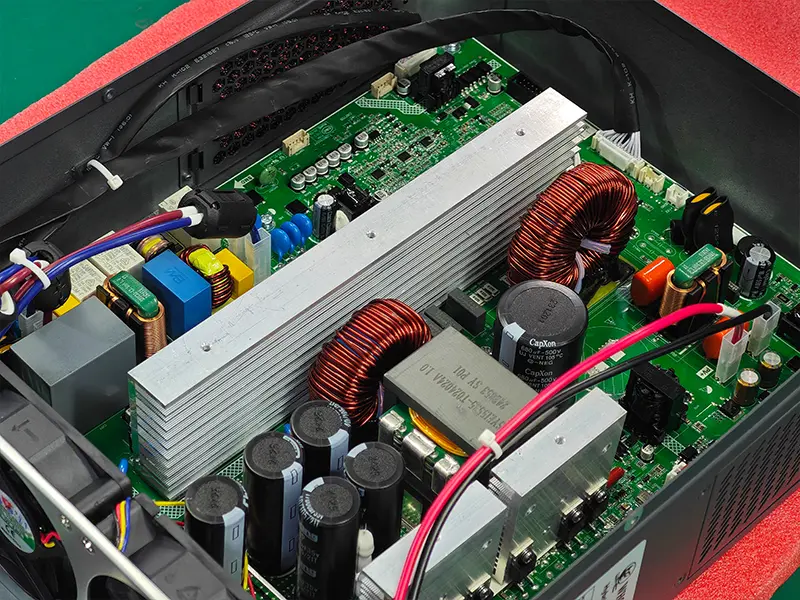
For lithium battery systems, BMS communication can help optimize battery performance and extend service life. Buyers should confirm whether the inverter supports the required communication protocol, battery voltage, charge current, and SOC monitoring. This is a key reason to work with a supplier that understands both inverter and battery configuration.
Typical African Project Scenarios
For a hotel project in Nigeria, the system may need to support lighting, pumps, refrigerators, office equipment, and air conditioning. The key risk is startup power and night backup time. A hybrid inverter system with lithium battery storage and parallel function may be required.
For a clinic or school in West Africa, the priority is stable backup power for essential loads. The inverter should switch quickly during grid failure and protect the battery from overcharge, over-discharge, overload, and overheating.
For a farm or water supply project, motor loads are the main concern. The EPC contractor should confirm whether the project needs a hybrid inverter, low frequency inverter, or dedicated pump inverter. The World Bank electricity access data can also support market research when planning off-grid and backup power solutions in Sub-Saharan Africa.
Supplier Evaluation Checklist for Distributors and EPC Contractors
When comparing a solar inverter supplier, buyers should rank suppliers by project support ability, not only by product price.
| Priority | Evaluation Point | Why It Matters for B2B Buyers |
|---|---|---|
| 1 | Project configuration support | Reduces the risk of wrong inverter size, wrong PV string design, and wrong battery matching. |
| 2 | Hybrid inverter product range | Helps distributors cover 1.2KW-11KW small and medium solar project demand. |
| 3 | Parallel function | Supports expansion, three-phase system building, and larger project flexibility. |
| 4 | BMS communication | Improves lithium battery compatibility, SOC monitoring, and long-term system stability. |
| 5 | Stock and spare parts | Important for wholesalers and installers who need fast delivery and after-sales response. |
| 6 | African project experience | Shows whether the supplier understands local grid conditions, load types, climate, and installation scenarios. |
WHC Solar has commercial and hybrid project references in African markets, including commercial solar system cases such as systems in Mali, Sierra Leone, and Nigeria. These project pages are useful for buyers who want to compare inverter quantity, battery capacity, solar panel configuration, and application scenarios.
Common Procurement Mistakes When Buying Hybrid Solar Inverters
The first mistake is choosing inverter power based only on the product label. For EPC projects, the real question is what load the inverter will run, how long it must run, and whether the load includes motors.
The second mistake is ignoring battery voltage and communication. A hybrid inverter may work poorly if the lithium battery cannot communicate properly or if charging parameters are not matched.
The third mistake is buying from a trader that cannot support configuration. For B2B buyers, this often creates hidden costs: repeated technical questions, installation delays, damaged local reputation, and more warranty pressure.
The fourth mistake is not planning spare parts and after-sales support. For distributors and wholesalers, inverter failure in the market can affect repeat orders. A supplier should support product documentation, technical guidance, spare parts, and stable model availability.
How WHC Solar Supports Hybrid Inverter and Solar System Projects
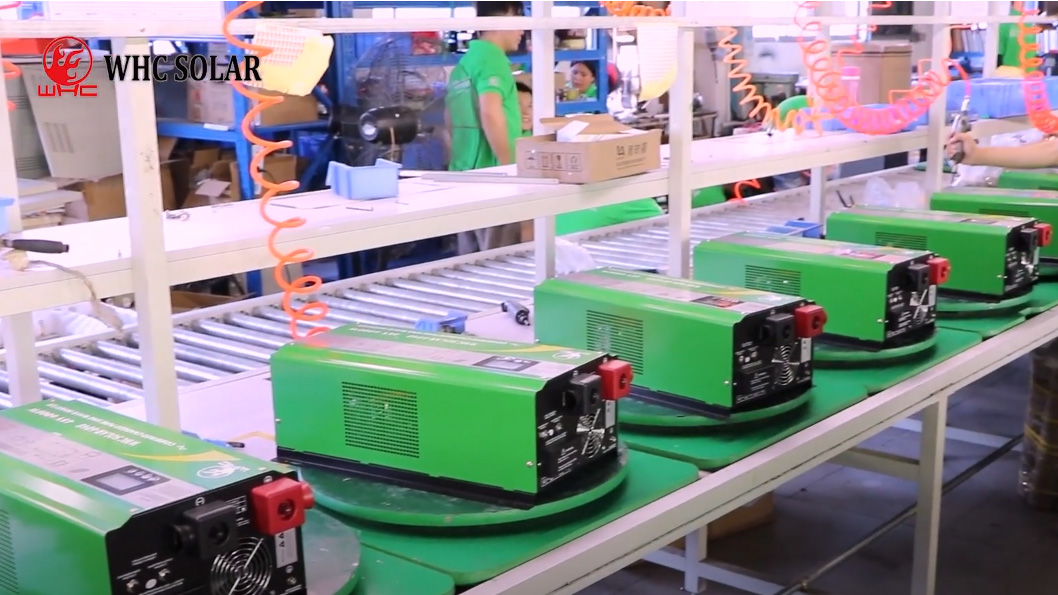
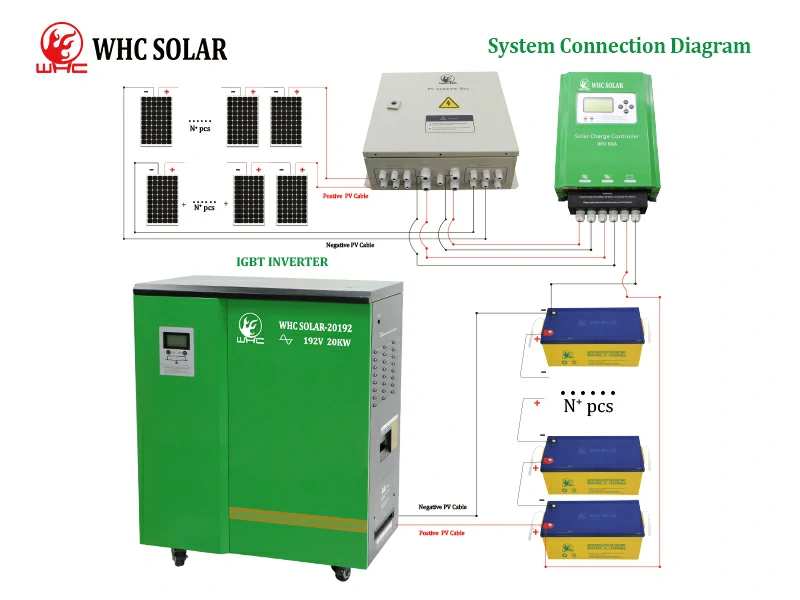
WHC Solar is positioned as a full solar energy solution provider. For African distributors, wholesalers, EPC contractors, solar installers, and project developers, this means WHC can support not only inverter supply, but also system configuration with lithium battery, solar panels, controller, ESS inverter, and energy storage solutions.
According to WHC product materials, WHC hybrid inverters include built-in MPPT controller, pure sine wave output, optional WiFi monitoring, multiple output priority modes, protection functions, dust-proof design for harsh environments, and parallel functions on selected 5KW and 11KW models. These details matter for African markets where projects may face unstable grid power, dusty installation environments, and mixed load types.
If you are sourcing inverter products for distribution or preparing an off-grid solar project quotation, WHC Solar can help review load demand, battery capacity, inverter model, PV string plan, and system configuration before ordering.
Conclusion
For African off-grid and C&I solar projects, choosing a hybrid solar inverter supplier should be a technical and commercial decision. Buyers should compare suppliers by configuration support, inverter range, MPPT design, battery communication, parallel capability, project experience, and after-sales support.
A low price can be attractive, but a well-matched inverter system protects the buyer鈥檚 project, reputation, and long-term business. For distributors, installers, and EPC contractors, working with a supplier that understands both inverter products and complete solar energy systems can help turn more inquiries into successful projects.
FAQ
What should I provide before asking for a hybrid inverter quotation?
You should provide the load list, total power, motor load details, daily operating hours, backup time, battery type, grid condition, project location, and whether the system needs off-grid, hybrid, or three-phase operation.
Is a hybrid inverter suitable for C&I projects?
Hybrid inverters can support small and medium commercial projects, especially when using parallel models. For larger C&I projects, an ESS inverter or full commercial energy storage solution may be more suitable.
Why does motor load affect inverter selection?
Motor loads such as pumps, air conditioners, and refrigerators can require 3-5 times startup power. If this is ignored, the inverter may overload even when the normal running power looks acceptable.
Can hybrid inverters work with lithium batteries?
Yes, but buyers should confirm battery voltage, charge current, BMS communication, and inverter protocol compatibility before ordering. This is especially important for LiFePO4 battery systems.
Why choose WHC Solar as a solar inverter supplier?
WHC Solar supports hybrid inverter supply, solar energy system configuration, lithium battery matching, African project applications, and B2B technical support for distributors, installers, EPC contractors, and project developers.
CTA
Planning an off-grid or hybrid solar project in Africa? Contact WHC Solar to request inverter model selection, load configuration support, and a B2B quotation for your project or distribution business.