
A bakery can buy enough battery capacity for its mixers and still lose production when an electric oven starts. Another may overspend by backing up equipment that can wait. Before requesting a commercial energy storage system, EPC contractors and installers should define which circuits must remain powered and for how long.
Effective bakery energy storage planning separates oven heating from electrical auxiliaries. It also connects the production timetable with solar generation, battery reserve and generator availability. The result should be a clear backup scope that every supplier prices against.
Separate Oven Heating from Electrical Auxiliary Loads
First, identify the oven’s heat source. A gas-, biomass- or diesel-fired oven may still need electricity for controls, fans, ignition and conveyors. However, its fuel input is not an electrical load. An electric oven requires a different calculation because its heating elements draw electrical power.
List mixers, proofers, refrigeration, packaging machines, ventilation and lighting separately. A proofer may include electrical heating, so avoid classifying every auxiliary as a small load. Record measured power, operating duration, simultaneous operation and acceptable interruption for each circuit.
Ask the production manager what happens during an outage. Must a batch finish, or can production pause safely? Which controls need uninterrupted power? The answers determine the protected circuits. Backup power alone does not guarantee baking quality or food safety.
Match Bakery Energy Storage to the Production Timetable
A bakery starting at 02:00 cannot rely on same-day daylight PV for its opening shift. Its batteries need sufficient energy beforehand. By contrast, daytime mixing or packaging may use solar power directly when output is available.
Build an hourly schedule covering preparation, preheating, baking, cooling and dispatch. Include overnight refrigeration and the period needed to recharge before the next shift. Also record weekend schedules and seasonal production peaks.
The World Bank’s solar PV potential assessment provides country and regional resource context. Nevertheless, annual averages do not establish a bakery’s daily recharge guarantee. Use site-specific monthly solar estimates, shading assessments and system losses.
For a complete project approach, explore WHC Solar’s integrated commercial solar solutions. The proposal should connect PV generation with production demand rather than simply add panels to a battery quotation.
Compare Three Backup Scopes Before Comparing Prices
The following screening table helps buyers define the same service requirement across competing proposals.
| Backup scope | Protected loads | Buyer must verify | Main limitation |
|---|---|---|---|
| Critical auxiliaries | Selected controls, refrigeration and essential auxiliaries; electric oven heating excluded. | Circuit segregation, actual auxiliary power and interruption tolerance. | Does not promise continued full production. |
| Controlled batch completion | Equipment needed to finish an agreed batch; other loads deferred. | Remaining batch energy, load sequence and operator procedures. | New batches may require generator support. |
| Full-production backup | All agreed production circuits, including specified electrical heating. | Coincident power, usable energy, recharge capability and protection design. | Greater power and energy requirements can increase project cost. |
Do not compare an auxiliary-only offer with a full-production offer as if both provide the same backup service.
Size a Commercial Energy Storage System by Both kW and kWh
Power capacity, measured in kW, determines the simultaneous load the system can support. Energy capacity, measured in kWh, helps determine duration. The National Laboratory of the Rockies’ Energy 101: Storage overview identifies power, facility consumption and autonomy duration as sizing drivers.
An illustrative backup calculation
Assume selected circuits average 30kW for three hours. Their AC energy requirement is 30 × 3 = 90kWh. If a hypothetical design allows an 80% usable battery window and 92% discharge-path efficiency, nominal capacity is approximately 90 ÷ (0.80 × 0.92) = 122.3kWh.
These percentages are calculation assumptions, not WHC specifications. The example excludes auxiliary consumption, aging allowance and extra outage reserve. If a 60kW electric oven runs continuously for one hour, it adds 60kWh of AC demand. Measured cycling may produce a different figure.
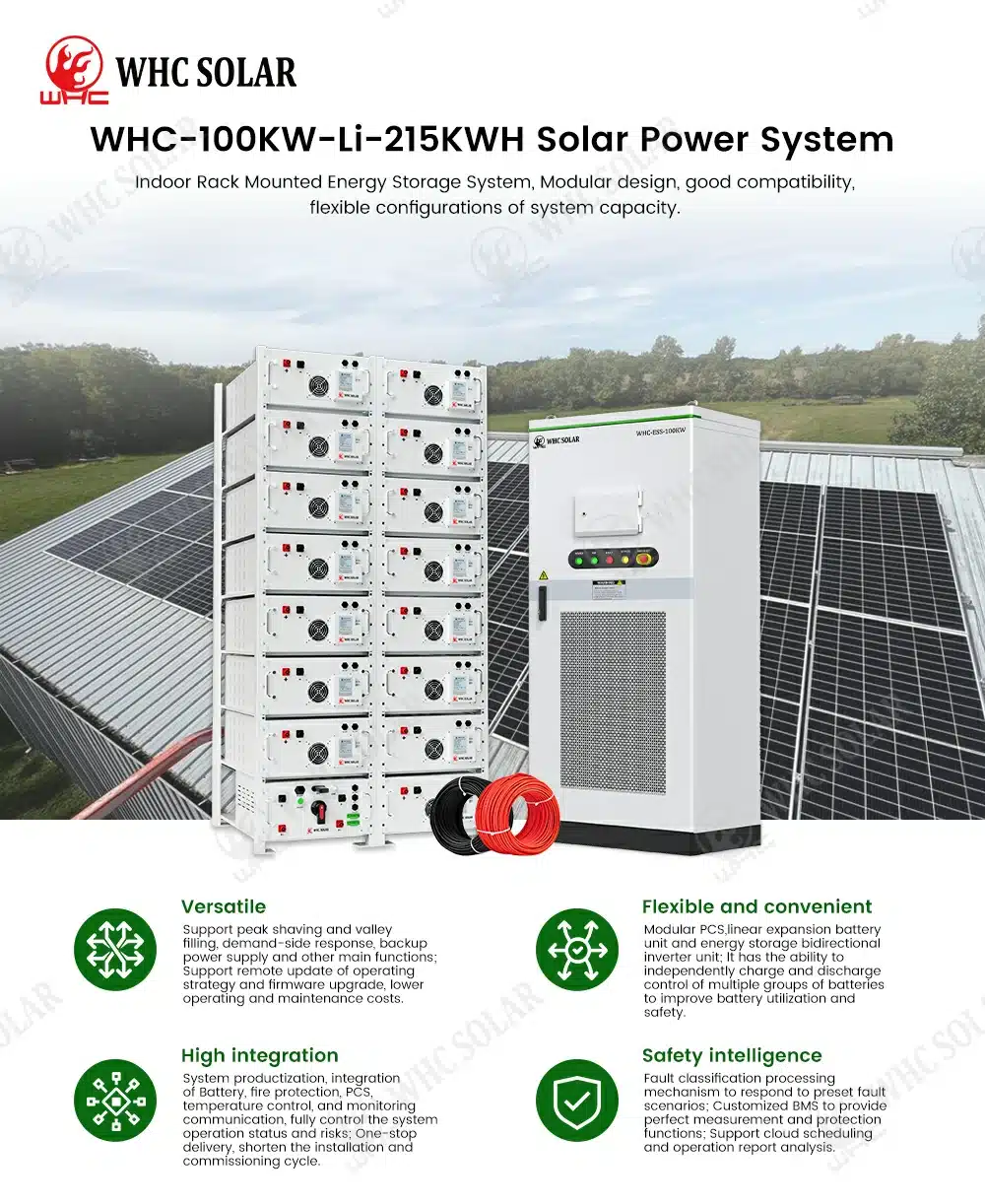
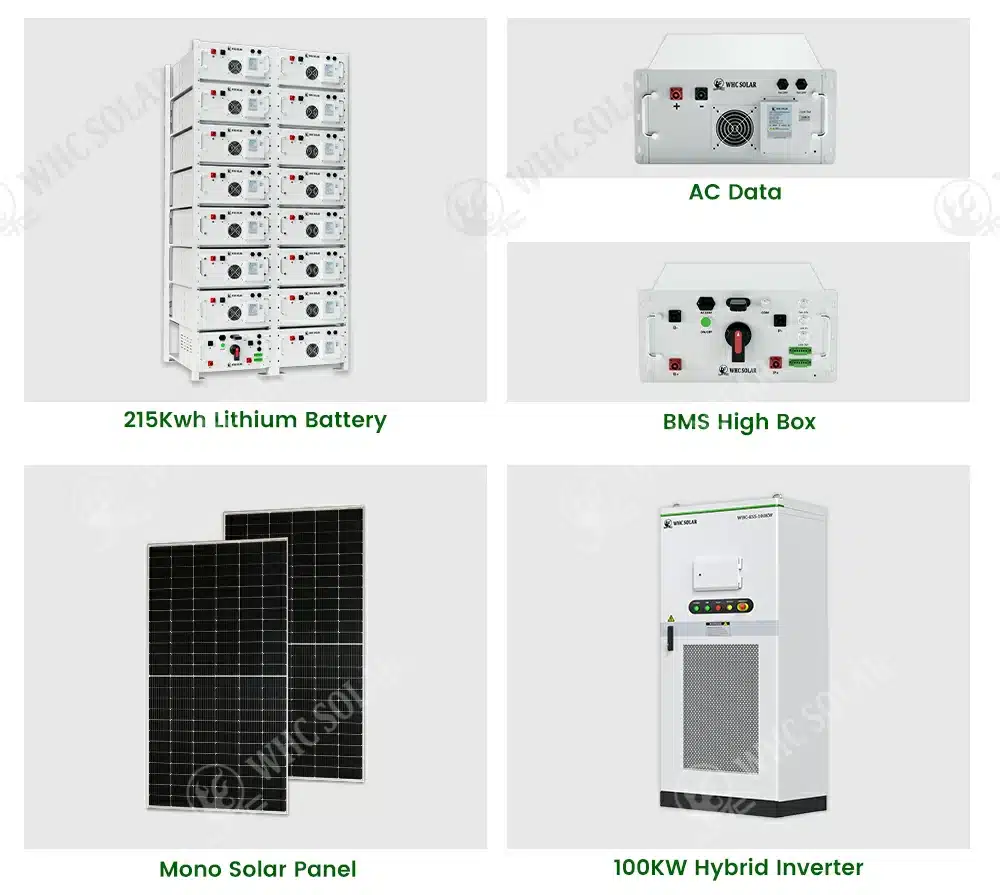
WHC’s product information includes a 100kW/215kWh system option. Its listed energy is not a bakery-specific runtime promise. Confirm usable capacity, discharge limits and site conditions in the quotation.
For bakery energy storage, verify battery current limits, PCS continuous output, phase loading and temperature derating together. Review the relevant inverter and conversion equipment against the measured load profile. Larger battery capacity cannot compensate for insufficient conversion power.
Coordinate Solar, Battery and Generator Operation
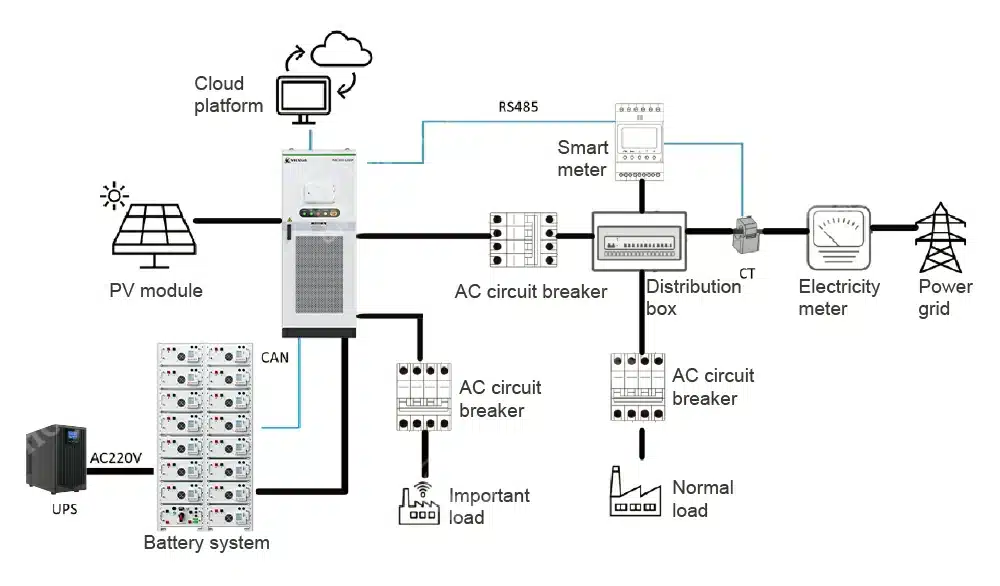
Set an agreed battery reserve before night production. Where supported, the EMS can coordinate charging and discharge priorities. Confirm how the BMS communicates permitted charging and discharging limits to the PCS.
A solar storage diesel hybrid system needs a documented generator interface. Check start commands, input limits, charge-current settings and the transition sequence. Generator capacity must cover concurrent loads and permitted battery charging; charging should reduce when production demand rises.
Do not assume every inverter can operate in parallel with a generator. Confirm the approved architecture and controls. Likewise, specify whether sensitive equipment requires a separate UPS. A switching-time claim is not proof that every controller will ride through a transfer.
Apply the Scope to Three Typical African Bakery Projects
These are illustrative planning scenarios, not reported WHC installations.
Nigeria: fuel-fired ovens and electrical auxiliaries
Separate oven fuel demand from mixers, fans and controls. Price critical auxiliaries first, then assess the incremental cost of supporting batch completion.
Ghana: an electric-oven production workshop
Measure oven preheating and thermostat cycling. Compare full-production backup with a smaller protected circuit arrangement and generator-supported heating.
Central Africa: a pre-dawn regional baking centre
Prioritize the night energy budget and next-day recharge window. Keep dispatch lighting and refrigeration visible in the schedule instead of counting only baking equipment.
Compare Quotes Using a Written Bakery Energy Storage Scope
Ask each bidder to return the same protected-load list, autonomy target and starting-SOC assumption. Require usable energy, supported power and exclusions in writing.
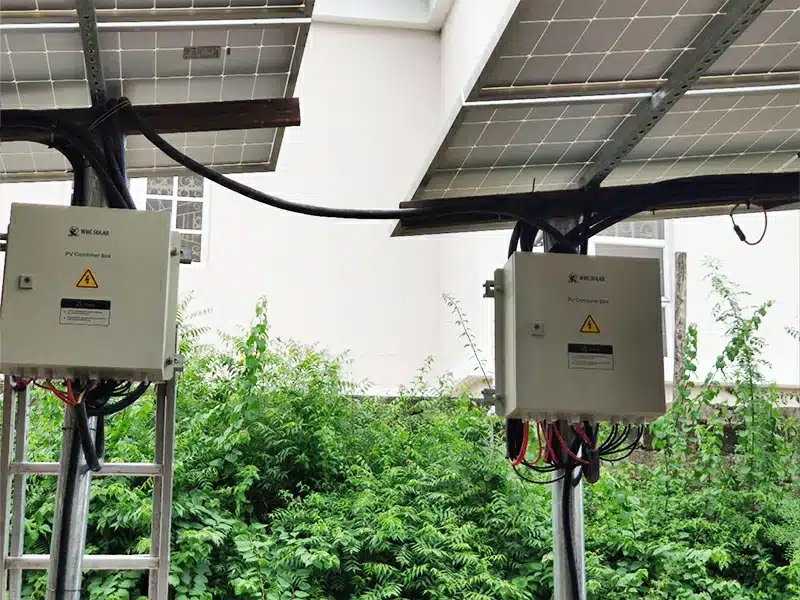
Compare the complete supply scope: PV equipment, batteries, PCS, EMS, protection, transfer equipment and distribution modifications. Identify who provides installation, settings, commissioning and training. Obtain model-specific warranty terms and service arrangements separately.
A suitable commercial energy storage system should match the bakery’s agreed production objective. Define that objective before choosing a cabinet size or accepting a low-price offer.
Frequently Asked Questions
Can solar batteries power an electric bakery oven?
Potentially, but both conversion power and usable battery energy must cover its measured demand. Include heating in the scope explicitly.
Does a fuel-fired oven need electrical backup?
It may need power for controls, fans and other auxiliaries. Check the oven manufacturer’s requirements and safe shutdown procedure.
How much battery capacity does night production require?
Calculate each protected load’s energy over the required period. Then account for usable capacity, losses, auxiliaries and agreed reserve.
Can daytime solar guarantee an overnight shift?
No. Verify seasonal recharge capability and the required starting SOC. Agree on grid or generator support for insufficient solar production.
What should an EPC send for a quotation?
Send equipment ratings, measured loads, production hours, backup priorities, electrical drawings, generator details and available PV space.
Request a Bakery Project Configuration from WHC Solar
Send your site location, oven heat source, hourly load schedule and target backup duration to WHC Solar’s project team. Request a bakery energy storage proposal that separates critical-load backup from full-production backup, with assumptions and exclusions clearly stated.