
Car wash solar power can help West African businesses manage daytime electricity demand and selected backup needs. Pressure washers, water pumps and vacuums need dependable power. Meanwhile, payment equipment and lighting support daily service. The system must follow the site’s actual operating pattern.
Therefore, car wash solar power planning should start with the equipment list, working hours and backup priorities. The following five benefits explain where solar can create value and what an owner needs to confirm before investing.
1. Match car wash solar power with daytime demand
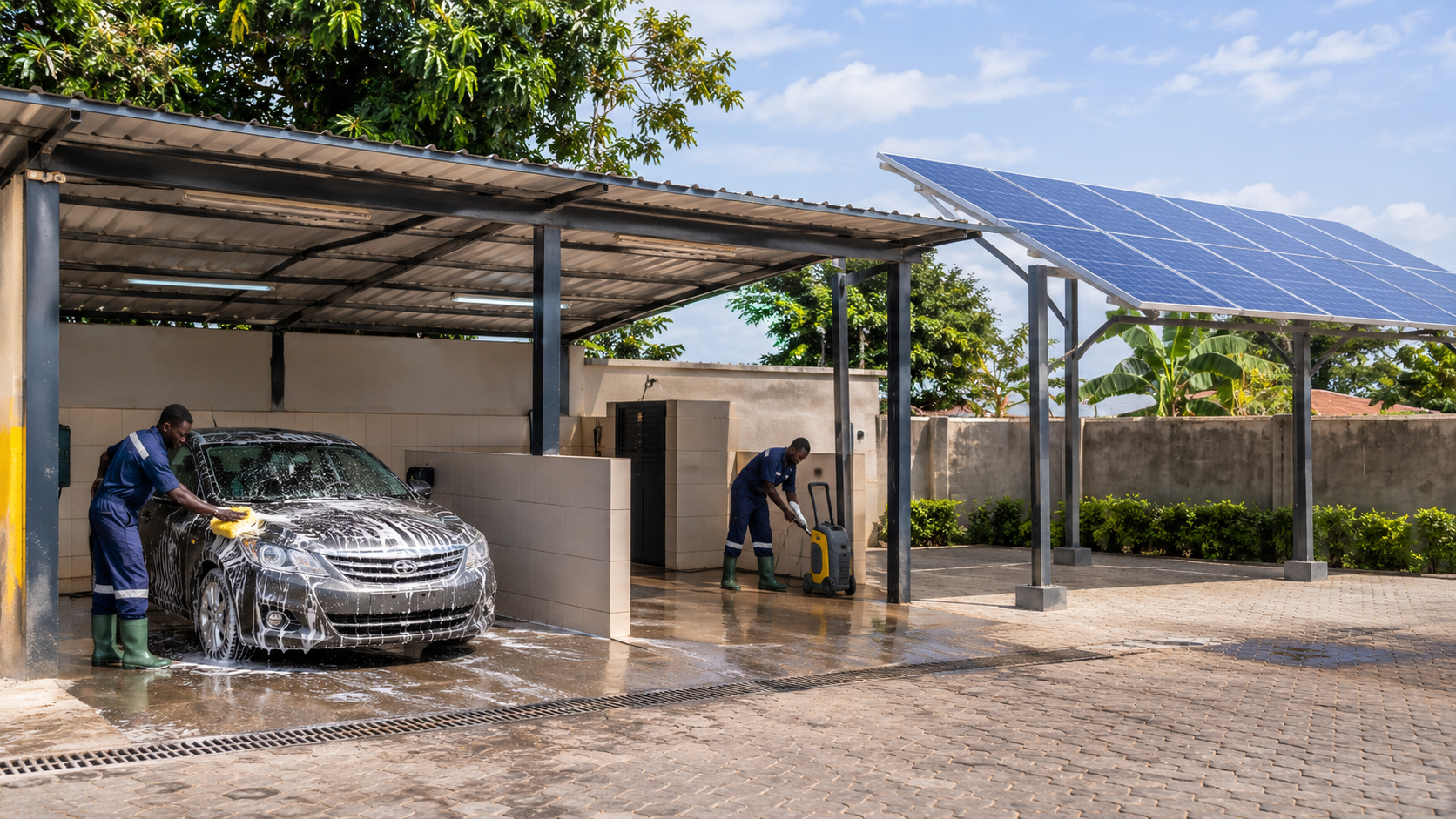
For example, many car washes operate during daylight hours. As a result, part of their electricity demand can overlap with solar generation. Direct use can make solar useful without requiring every unit of energy to pass through a battery first.
However, the match depends on the business schedule. First, measure busy periods, quiet weekdays and weekend demand before selecting equipment. A large roof alone does not establish how much solar electricity the site can use.
Illustrative scenario: a daytime car wash in Ghana
For example, suppose the measured operating load averages 6 kW across four working hours. That period requires 24 kWh of electricity. This is a load calculation, not a claim that a 6 kWp solar array will produce 24 kWh.
Next, compare the hourly load with a site-specific solar estimate. WHC Solar’s commercial solar solutions provide a starting point for discussing the equipment and operating requirements.
2. Cut grid purchases with car wash solar power
In addition, solar electricity used by operating equipment can replace some utility purchases. Consequently, an owner can reduce grid energy purchases when generation and demand overlap.
However, evaluate the bill impact using the actual tariff and consumption profile. For instance, curtailed energy or unpaid exports do not have the same value as electricity used on site. Also check whether solar remains available during an outage.
For example, if an illustrative system generates 30 kWh and the business directly consumes 22 kWh, those 22 kWh are the starting point for assessing direct-use savings. The remaining energy does not automatically earn the same financial benefit.
Also include installation, maintenance, monitoring and eventual component replacement in the comparison. This helps an owner judge operating value rather than selecting a system solely by its purchase price.
3. Reduce suitable periods of diesel-generator operation
Similarly, at sites using diesel generators, solar can supply part of the daytime demand. With suitable controls and storage, selected operating periods may also allow the generator to stop.
As a result, suitable operating periods may use less fuel and fewer generator hours. In addition, noise falls during periods when the generator is actually off. The result depends on the load, generator characteristics and approved operating arrangement.
Illustrative scenario: a generator-supported car wash in Nigeria
First, record generator runtime, operating load and fuel consumption. Then ask the supplier to explain when solar will reduce generator output and when the proposed system can safely stop the generator.
Also check how pressure washers and water pumps start. For each machine, confirm its phase, rated current, starting method and simultaneous use. A generic multiplier cannot replace the equipment information.
Finally, use measured consumption or the generator’s fuel curve to assess savings. A generator does not necessarily consume fuel at its full-load rate while serving a small load.
4. Plan car wash solar power for selected-load backup
For instance, backup priorities can include payment equipment, communications, security and selected lighting. Consequently, these functions may need less power than running every washing machine at once.
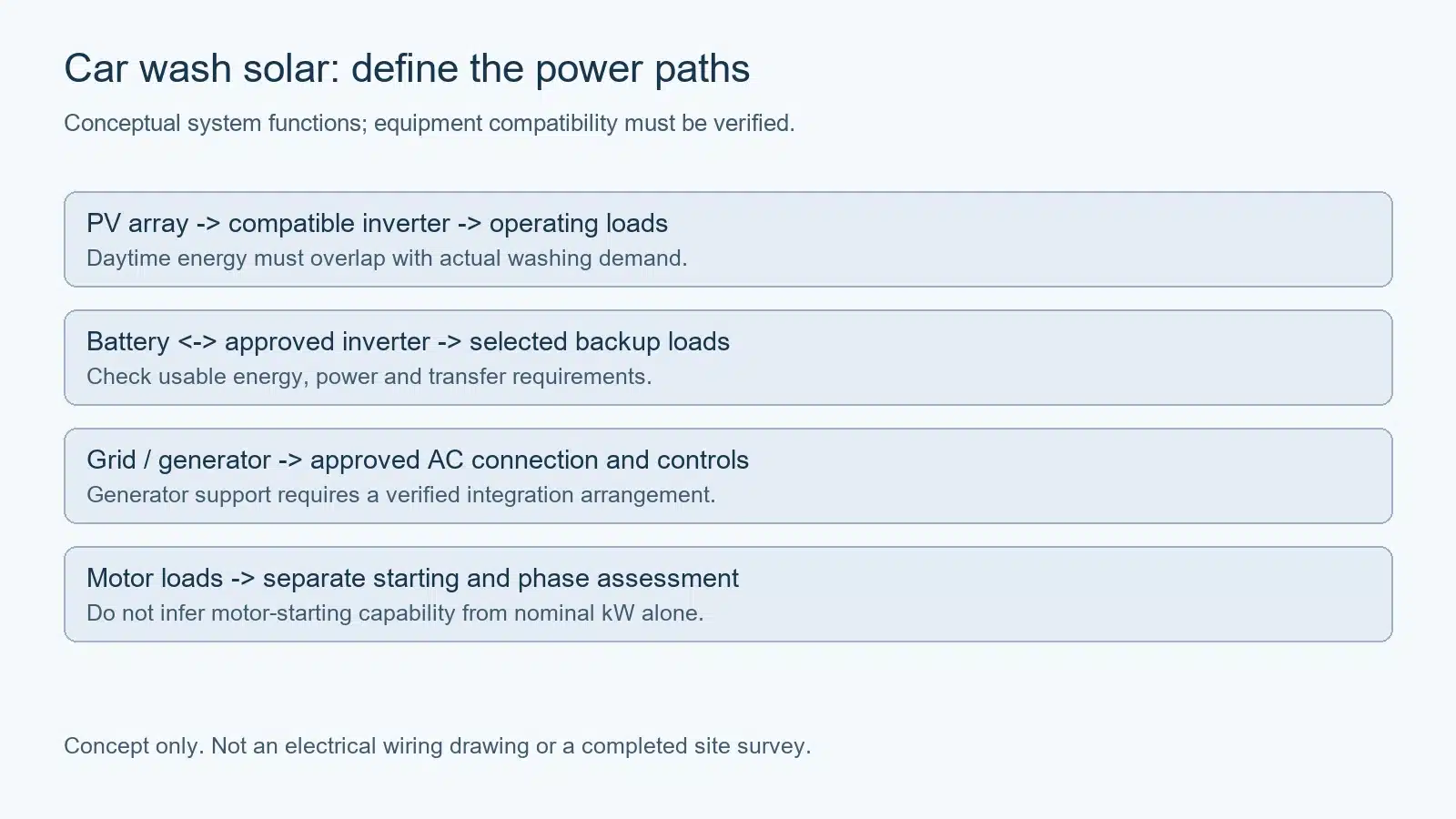
However, ordinary grid-connected solar does not automatically provide outage backup. The US Department of Energy explains the role of inverters in its solar inverters and grid services overview. A backup arrangement needs suitable equipment, isolation and controls.
For example, selected loads averaging 1.5 kW over two hours require 3 kWh at the load. However, battery sizing must also allow for losses, discharge limits, reserve and ageing. Nameplate battery capacity alone does not establish delivered backup time.
If washing machinery must continue, assess it separately. In particular, check starting current, phase requirements, available inverter power and required operating duration.
When reviewing a hybrid inverter, confirm the exact battery compatibility and transfer performance. The product description alone does not guarantee uninterrupted operation for every connected device.
5. Plan solar investment around car wash growth
For example, an owner may begin with daytime solar and add approved storage later. Alternatively, a business with frequent interruptions may need backup from the beginning. Either approach should follow a defined operating need.
Planning expansion before the first order can reduce avoidable redesign. Nevertheless, additional panels, batteries or machines must remain within the selected equipment’s documented limits.
Illustrative scenario: adding a second washing bay in Senegal
First, a site planning another bay should list the new motors and expected working hours. Then check PV input capacity, electrical distribution and permitted battery expansion before ordering the initial system.
The Department of Energy’s solar energy and storage overview provides background on combining generation and storage. For purchasing decisions, distinguish power in kW from stored energy in kWh.
Review a commercial solar system against the actual business load. A larger package is useful only when its configuration and cost fit the site.
Which car wash solar power benefits should your proposal demonstrate?
| Business objective | Evidence to request | Purchasing conclusion |
|---|---|---|
| Daytime use and lower grid purchases | Hourly demand, estimated solar generation and tariff assumptions. | Compare electricity used on site, not generation alone. |
| Reduced diesel operation | Generator load records, fuel curve and proposed control sequence. | Identify when the generator reduces output or stops. |
| Selected-load backup | Load list, starting requirements, usable battery energy and transfer specification. | Define supported equipment and duration before comparing prices. |
| Phased growth | Future equipment list and manufacturer-approved expansion limits. | Check that later additions fit the original architecture. |
Frequently asked questions
Can car wash solar power run pressure washers and water pumps?
Yes, a suitably designed system can support these loads. However, the proposal must check motor starting, phase, simultaneous use and the inverter’s documented ratings.
Does every car wash need solar batteries?
No. Daytime electricity savings may be possible without storage. Batteries should serve a defined need, such as selected-load backup or shifting available solar energy to another period.
Will solar eliminate the electricity bill?
Not necessarily. Remaining demand, fixed charges, tariffs and the amount of usable solar energy determine the final bill. Ask for a site-specific assessment.
Can an existing generator remain in the system?
Potentially, provided its connection and control arrangement are compatible with the proposed equipment. Confirm this integration before purchasing.
What information does WHC Solar need?
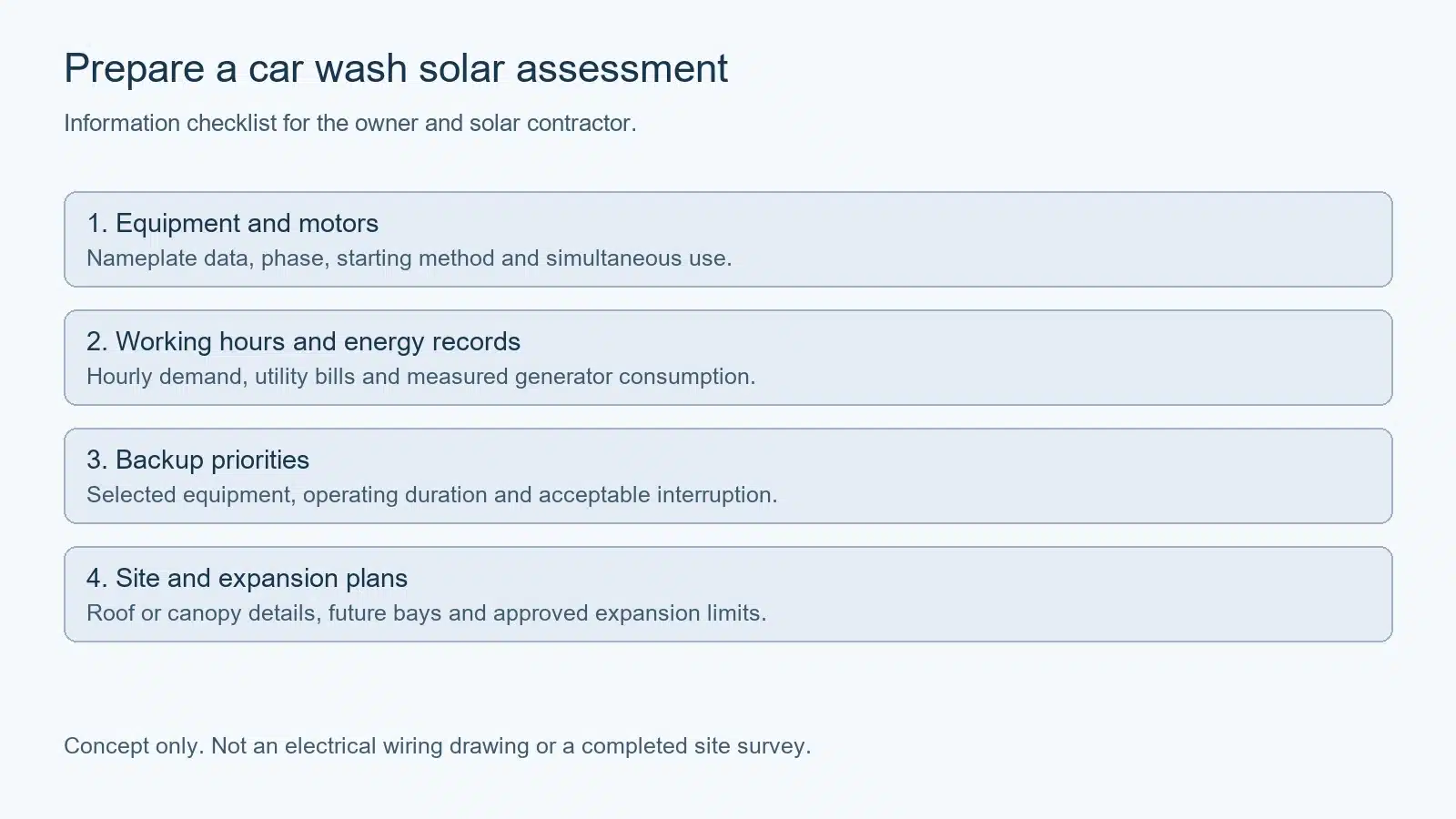
Prepare the location, working hours, equipment nameplates, electricity bills, generator records, roof or canopy information and backup priorities.
Explore car wash solar power for your business
Car wash solar power can support daytime use, lower grid purchases and reduced diesel operation. It can also support selected-load backup and planned expansion. Each benefit should follow measured demand and a suitable configuration.
Contact WHC Solar with your load list and operating schedule to discuss a car wash solar assessment and B2B quotation.