
For EPC contractors, solar installers, distributors, and project developers in Africa, choosing the right commercial energy storage system solution providers is not only a product sourcing decision. It affects project reliability, installation risk, after-sales service, customer satisfaction, and long-term business profit.
Across West Africa, Central Africa, and Sub-Saharan Africa, many commercial and industrial sites face unstable grid power, high diesel generator costs, voltage fluctuation, and growing demand for reliable backup power. According to the IEA Africa Energy Outlook, electricity access and reliable power remain major priorities across the region. Hotels, factories, hospitals, schools, office buildings, telecom sites, farms, and mining projects need solar energy systems that can work in real operating conditions, not only on paper.
This guide explains how B2B buyers should evaluate commercial energy storage systems, what system components matter most, and how to select a supplier that can support African C&I projects from configuration to delivery and technical service.
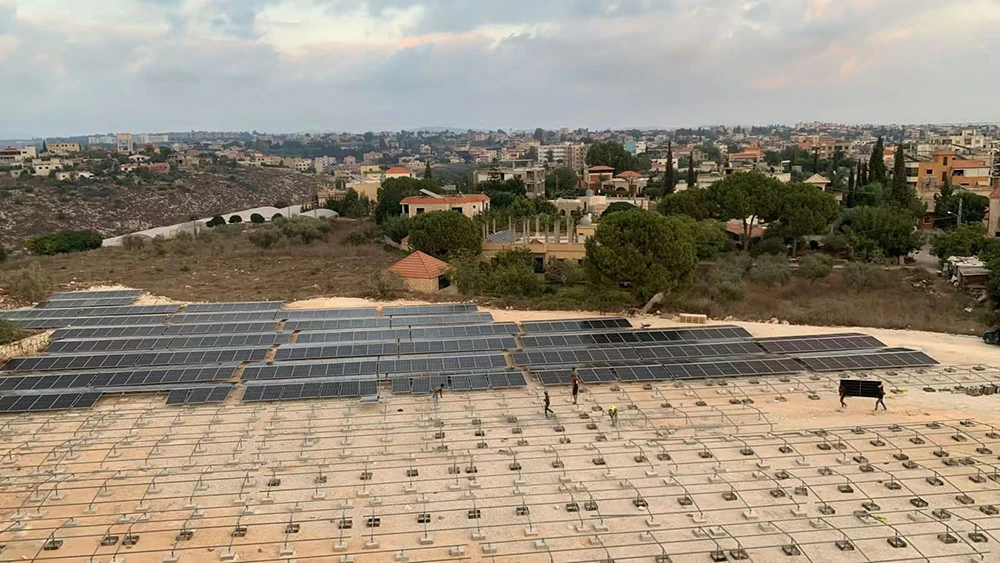
Why African C&I Projects Need a Commercial Energy Storage System
A commercial or industrial solar project is different from a small residential installation. The load is larger, the operating hours are longer, and power failure can directly affect business income. A hotel may need stable electricity for rooms, pumps, lighting, and air conditioning. A hospital needs backup power for critical equipment. A factory needs reliable energy to avoid production downtime. A school or government building may need a system that can run daily with limited grid support.The IRENA renewable energy market analysis for Africa also highlights the role of renewable energy in improving energy security and supporting economic growth across African regions.
In these situations, a commercial energy storage system helps store solar power, manage grid instability, reduce generator runtime, and provide backup power when the grid fails. For African projects, the value is not only energy saving. The real value is power continuity, predictable operation, and a system that can be maintained locally.
WHC Solar positions its solar business around complete project solutions. For buyers comparing commercial solar solutions, the most important question is whether the supplier can provide a matched system instead of separate products that require the buyer to solve compatibility issues later.
Typical Applications for Commercial and Industrial Energy Storage Systems
A commercial and industrial energy storage system is suitable for many African project scenarios where grid supply is weak, expensive, or unavailable. Common applications include factories, hotels, hospitals, schools, office buildings, government facilities, mining sites, agricultural processing sites, telecom stations, and remote commercial buildings.
For EPC contractors, these scenarios usually have different requirements. A hotel project may require stable night power and generator reduction. A factory may need three-phase output and strong load capacity. A hospital may prioritize backup power and fast switching. A remote site may need off-grid operation with solar panels, lithium batteries, hybrid inverter or ESS inverter, and monitoring.
Because of these differences, buyers should avoid one-size-fits-all quotations. Reliable commercial energy storage system solution providers should first understand the load profile, daily consumption, backup time, installation location, grid condition, and expansion plan before recommending a system.
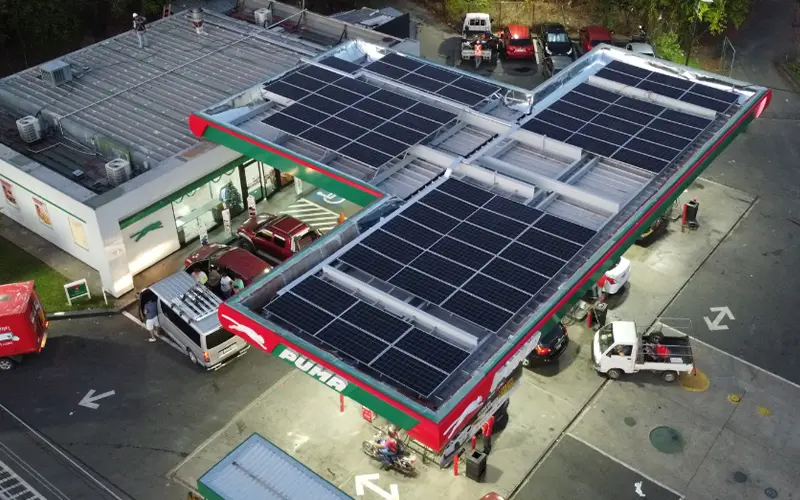
Core Components Buyers Should Check Before Sourcing
A strong C&I storage project depends on the quality and compatibility of each component. For African EPC and distributor projects, the most important components usually include lithium battery packs, PCS or ESS inverter, solar panels, EMS, BMS, protection devices, cooling or temperature control, fire protection, cabinet or container structure, and monitoring communication.
Lithium Battery System
The battery is the core value part of an energy storage project. For C&I use, buyers should check battery chemistry, capacity, voltage platform, cycle life, depth of discharge, protection design, and BMS communication. WHC product training materials emphasize LiFePO4 lithium batteries for energy storage because they are widely used for solar storage projects and support safer long-term operation.
ESS Inverter and PCS
The inverter or PCS manages the conversion between DC power and AC power. For C&I systems, it should support the required phase, voltage, load size, and working mode. WHC Solar’s inverter product materials highlight ESS inverter functions such as bidirectional conversion, grid/off-grid switching, EMS dispatch, remote monitoring, and battery communication through CAN or RS485.
For projects that need inverter support, buyers can also review WHC Solar’s solar inverter solutions to match system requirements with the correct inverter type.
EMS, BMS, and Monitoring
A good commercial battery energy storage system should not only store energy. It should manage charging, discharging, battery protection, and system operation. EMS helps control operating strategy, such as PV priority, battery priority, grid priority, peak shaving, or backup mode. BMS helps monitor battery voltage, current, temperature, SOC, and protection status.
System Cabinet or Container Design
For larger projects, the system structure matters. Buyers should consider whether the solution uses indoor cabinet design, outdoor cabinet design, or containerized design. For hot, dusty, or remote African sites, protection level, cooling, maintenance access, wiring design, and transport safety can affect long-term operation.
How to Size Energy Storage Systems for Commercial Projects
When evaluating energy storage systems for commercial projects, buyers should not start with battery capacity alone. The correct sizing process begins with the project load and operation target.
First, calculate the critical loads. Separate essential loads from non-essential loads, especially for hospitals, hotels, and factories. Second, estimate daily energy consumption in kWh. Third, confirm the required backup time during grid outage or night operation. Fourth, check peak load and starting current for motors, pumps, compressors, or industrial equipment. Fifth, consider whether the system must work off-grid, hybrid, or grid-connected.
For example, a 30KW commercial project and a 100KW commercial project may both need lithium battery storage, but the inverter power, battery capacity, solar panel quantity, and backup time can be very different. WHC Solar’s commercial solar project range includes commercial storage systems such as 30KW, 50KW, 100KW, and larger containerized systems for project applications. Buyers can review the commercial solar system product category when preparing project requirements.

How to Evaluate Commercial Energy Storage System Solution Providers
When comparing suppliers, price is important, but it should not be the only decision factor. A low quotation can become expensive if the system is undersized, components are incompatible, documentation is unclear, or after-sales support is weak.
1. Check Whether the Supplier Understands African Project Conditions
Africa is not a single market. West Africa, Central Africa, and Sub-Saharan Africa include different grid conditions, climate environments, import requirements, and project types. A qualified supplier should understand unstable grid supply, generator backup habits, high ambient temperature, remote installation sites, and the need for practical technical support.
2. Ask for a Complete System Configuration
A reliable supplier should provide a complete proposal that includes inverter power, battery capacity, PV array recommendation, system working mode, protection devices, wiring logic, installation notes, and optional monitoring. This is especially important for EPC contractors who must present clear technical plans to project owners.
3. Confirm Product Compatibility
In an industrial battery energy storage system, battery and inverter compatibility is critical. Buyers should confirm BMS communication, voltage range, current limit, parallel expansion, and protection logic before ordering. If batteries, inverters, and controllers come from different suppliers, the EPC contractor may carry the integration risk.
4. Review Quality Control and Testing
For C&I projects, system failure can damage the buyer’s reputation. Buyers should ask about production process, aging test, safety protection, monitoring, and factory inspection. WHC Solar’s product materials emphasize automatic production, full-power inverter aging tests, battery management protection, and technical support for project clients.
5. Check Local Cases and After-Sales Capability
Project cases help buyers judge whether the supplier has experience with real C&I applications. WHC Solar has listed commercial solar system cases in African markets, including Nigeria, Sierra Leone, Mali, and South Africa. Buyers can review commercial solar system cases to compare system sizes and application scenarios.
Common Procurement Mistakes in C&I Energy Storage Projects
One common mistake is choosing battery capacity without checking actual load demand. Another is selecting an inverter based only on rated power while ignoring surge load, three-phase requirements, or motor loads. Some buyers also overlook installation environment, cooling, communication protocol, and future expansion.
Another risk is treating a commercial energy storage system like a simple product order. In reality, C&I storage is a project solution. The buyer needs technical configuration, logistics planning, installation guidance, spare parts strategy, and after-sales response. This is why working with experienced commercial energy storage system solution providers is more valuable than buying disconnected components from multiple sources.
How WHC Solar Supports African C&I Energy Storage Projects
WHC Solar is positioned as a full solar energy solution provider for B2B customers. For African commercial and industrial projects, WHC Solar can support integrated solar energy solutions that combine lithium battery storage, inverter, solar system components, project configuration, and technical support.
For distributors and wholesalers, WHC Solar helps build a product supply structure for repeated business. For EPC contractors and project developers, WHC Solar supports project-based configuration for hotels, schools, hospitals, factories, government buildings, mining sites, and other C&I applications. The goal is to help buyers reduce integration risk and move from product inquiry to a practical project solution.
If your project requires a matched industrial and commercial energy storage system, you can contact WHC Solar through the official Contact WHC Solar page and request a configuration based on your load list, backup time, and installation location.
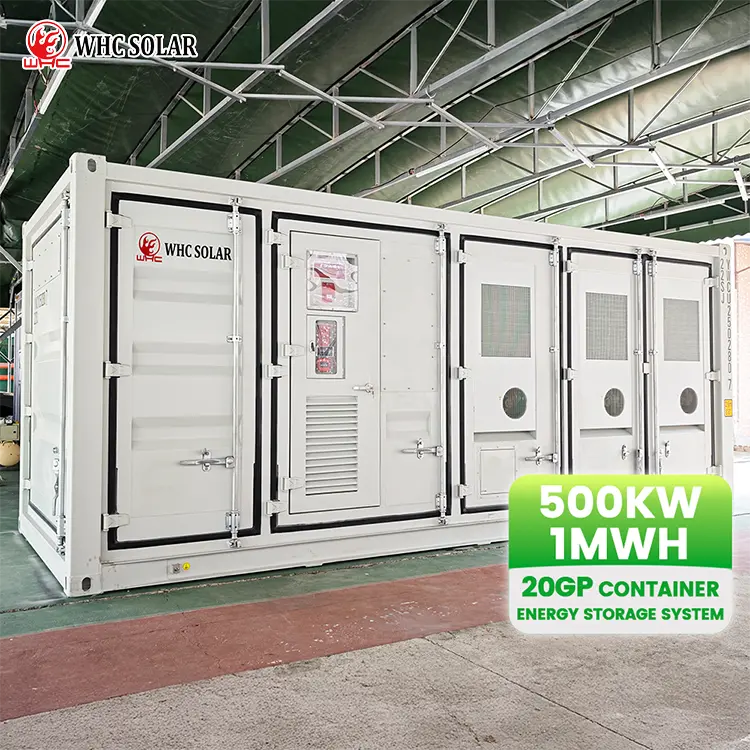
Conclusion: Choose Solution Capability, Not Only Product Price
For African C&I solar projects, the best commercial energy storage system solution providers should offer more than batteries and inverters. They should help buyers define the correct system capacity, match core components, reduce project risk, and support long-term operation.
Whether the project is a hotel in Nigeria, a school in Sierra Leone, a factory in Ghana, a mining site in Central Africa, or a remote commercial facility in Sub-Saharan Africa, the supplier decision should focus on system design, product compatibility, quality control, documentation, and after-sales support.
FAQ
What information should I provide before requesting a commercial energy storage system quotation?
You should provide the load list, total power demand, daily electricity consumption, required backup time, grid condition, project location, installation environment, and whether the system should be off-grid, hybrid, or grid-connected.
What is the difference between a commercial energy storage system and a residential storage system?
A commercial system usually has higher power, larger battery capacity, stronger protection design, three-phase requirements, more complex energy management, and stricter reliability needs. It is designed for business and project operation, not ordinary household use.
Can a commercial battery energy storage system reduce diesel generator usage?
Yes. In many African C&I projects, solar plus battery storage can reduce generator runtime by storing solar energy during the day and supplying power during outages, night operation, or peak demand periods.
Why is inverter and battery compatibility important?
Battery and inverter compatibility affects system safety, charging control, discharge performance, SOC monitoring, and long-term stability. Buyers should confirm voltage range, BMS communication, current limits, and protection settings before purchase.
Is WHC Solar suitable for EPC contractors and distributors in Africa?
Yes. WHC Solar focuses on B2B solar energy solutions and supports distributors, wholesalers, EPC contractors, solar installers, and project developers with product supply, project configuration, and technical support for African markets.
CTA
Planning a commercial or industrial solar storage project in Africa? Contact WHC Solar to get a project-based configuration and B2B quotation for your load demand, backup time, and installation scenario.