
A road-lighting quotation can show high lumens and a low unit price while leaving the road between poles poorly lit. For EPC contractors, solar street light procurement should therefore compare the light delivered to the road, the hours it remains available and the evidence behind each claim.
Before awarding a West African road project, put every bidder on the same road layout and operating schedule. This guide explains how to compare lumens, lux, photometric files and battery requirements without treating catalogue wattage as proof of performance.
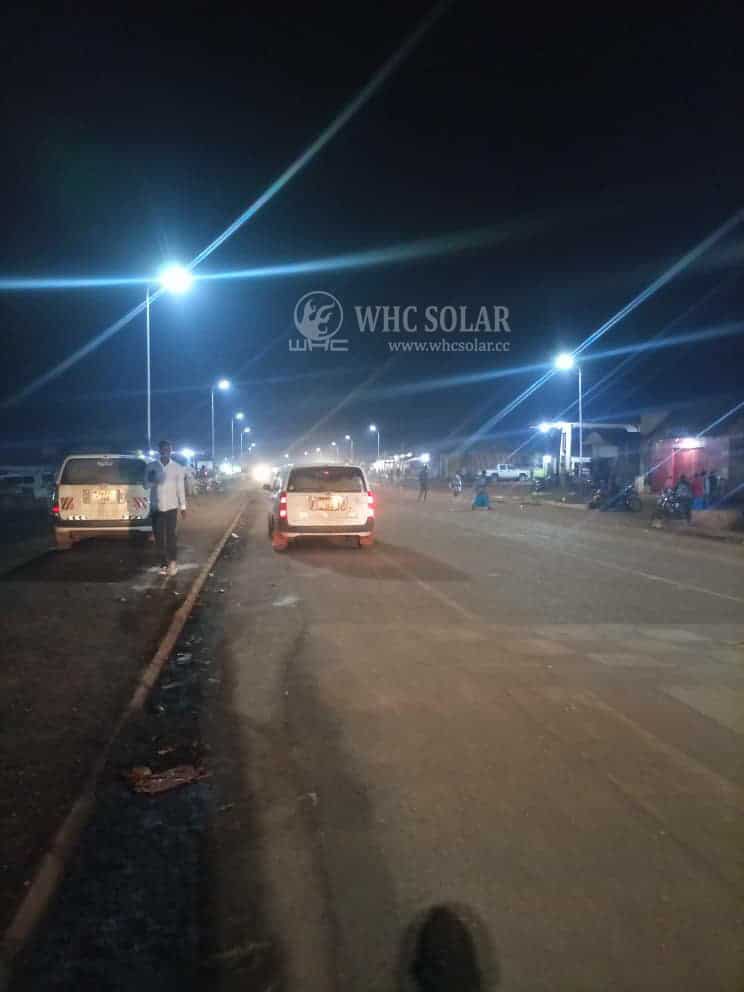
Start solar street light procurement with a common design brief
First, issue a shared design brief. Record road width, lanes, pedestrian areas and pole locations. Also specify mounting height, outreach and tilt. In addition, include trees, buildings and other sources of shade. Otherwise, two suppliers may calculate different roads and submit results that appear comparable.
Next, have the project lighting engineer define the applicable lighting class and acceptance criteria. Depending on the road and governing specification, these may include illuminance or luminance, uniformity and glare. There is no single lux target or pole spacing suitable for every West African road.
The U.S. Department of Energy model specification for LED roadway luminaires offers a reference for structuring bid documents. However, it does not replace the requirements adopted by the local road authority.
Lumens, lux and watts answer different purchasing questions
Lumens describe output; lux describes light reaching a surface
Lumens measure luminous flux. First, check whether the quoted figure describes the LED source or the complete luminaire, including its optics. In contrast, an LED-chip efficacy claim cannot establish the finished fixture’s measured output.
Lux measures illuminance: one lux equals one lumen per square metre. However, dividing catalogue lumens by road area cannot predict an installed lighting pattern. Instead, optics, mounting geometry and overlapping beams determine where the light reaches.
Check minimum values and the stated uniformity formula
An average value can hide dark areas. For example, an illustrative layout with 12 lux average and 3 lux minimum has an average-to-minimum ratio of 4:1. Alternatively, minimum divided by average gives 0.25. These are calculation examples, not recommended road-lighting limits.
Therefore, require every bidder to identify the uniformity metric and calculation area. A result that excludes the pavement edge cannot be compared directly with one that includes it.
Also separate initial results from maintained results. Therefore, ask bidders to state their light loss factor and its basis. For a fair comparison, use the same agreed maintenance assumptions across bids.
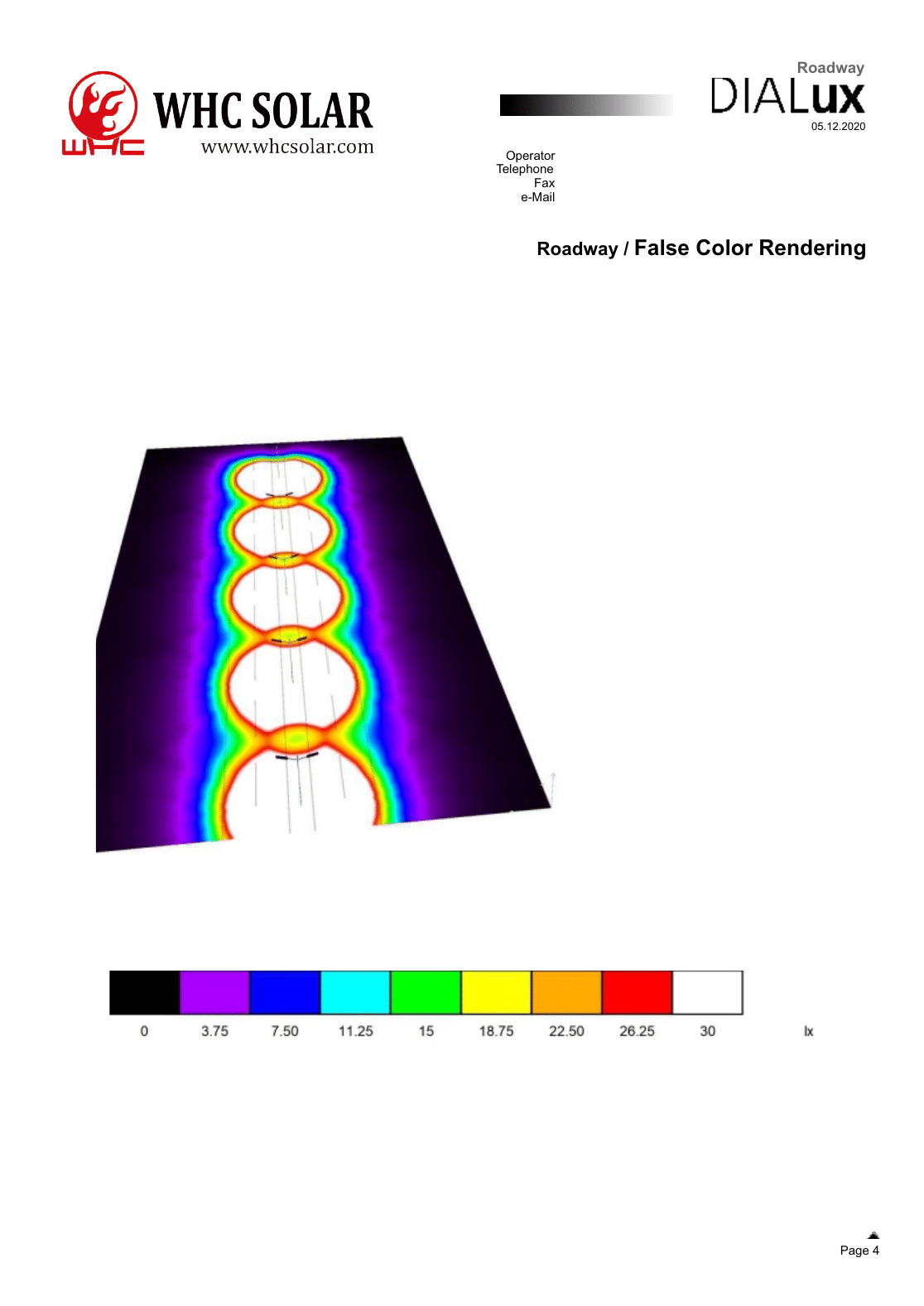
Solar street light procurement: a photometric bid checklist
First, use the following screening table before comparing prices. If evidence is missing, request clarification before assigning a technical pass.
| Comparison item | Evidence to request | Reason to clarify the bid |
|---|---|---|
| Model and optic | Exact luminaire code, optic identifier and matching photometric file. | The simulation uses a different fixture or an unidentified lens. |
| Light output and power | Complete-luminaire measurements, electrical test boundary and operating mode. | Chip efficacy or a product name substitutes for measured performance. |
| Calculation geometry | Common road dimensions, pole arrangement, grid, tilt and mounting height. | A bidder changes spacing or excludes difficult areas without approval. |
| Maintained performance | Required lighting metrics, light loss factor and supporting assumptions. | Only initial average lux or an unexplained colour plot is supplied. |
| Night operation | Hourly power and output schedule, sensor settings and low-battery behaviour. | Full-output calculations accompany an undisclosed dimming programme. |
| Energy support | Usable battery energy, PV rating, losses and site-specific recharge assumptions. | “All-night” operation has no defined light level or energy balance. |
Keep this technical review separate from the commercial comparison. Once bids meet the agreed requirements, compare the complete installed scope, delivery terms and maintenance provisions.
Verify photometric evidence for solar street light procurement
First, request the available IES or LDT file and its supporting report. Then match the model, optic, output and test conditions to the proposed supply. However, a photometric file describes light distribution alone. It cannot prove battery endurance or confirm that delivered units match the tested sample.
The Department of Energy overview of lighting metrics and test methods identifies LM-79 for optical and electrical measurements of solid-state lighting products. Therefore, ask which method and edition support the report. An unsupported “LM-79 compliant” label is insufficient.
In addition, retain the calculation inputs with the bid. As a result, later substitutions are easier to review. For example, a different optic, driver setting or mounting angle may require a revised calculation.
Match solar street light output to battery and PV capacity
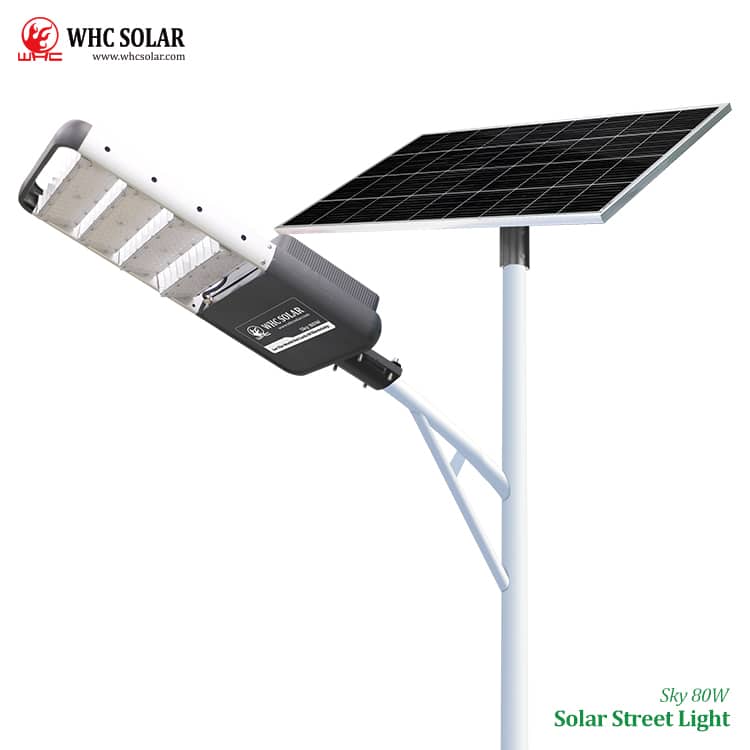
WHC’s street-light product materials describe a system combining a solar panel, LiFePO4 battery, LED light source and controller. Consequently, our procurement recommendation is to evaluate these components together. In particular, the controller’s programme affects both road lighting and nightly energy use.
For illustration, an LED load drawing 60 W for four hours and 30 W for eight hours consumes 480 Wh per night. However, this excludes driver and controller losses. In addition, battery sizing must account for usable capacity, temperature, ageing and the agreed reserve.
However, a 50% power setting does not automatically establish exactly 50% light output. Therefore, request dimming data and check lighting performance during each scheduled period. In addition, sensor-based operation needs an agreed baseline and response time.
Then check whether the PV system can restore the required energy under the site’s design-month conditions. However, annual sunshine averages alone cannot establish reliable recovery after poor weather.
Compare the component arrangements within WHC’s solar lighting solutions, then request model-specific information for the proposed configuration.
Two West African road-project scenarios
The following are illustrative procurement situations, not reported WHC installations.
Ghana: a new road with proposed pole positions
For example, an EPC team can ask bidders to evaluate a shared base layout. If a supplier proposes wider spacing, require a separate alternative calculation and a revised installed-cost schedule. Although fewer poles may reduce civil works, the alternative still needs to satisfy the approved lighting criteria.
Nigeria: an upgrade using existing poles
For an existing road, pole spacing and outreach may be fixed. Therefore, compare optics against the surveyed geometry before selecting a fixture. Also examine panel shading and orientation: a luminaire that fits the bracket may still have an unsuitable solar exposure.
Build a solar street light procurement request
For solar street light procurement, send the road drawing, site coordinates, lighting criteria and night schedule together. Then request an itemised offer covering the luminaire, PV module, battery, controller settings and installation boundaries.
WHC’s project-oriented product materials include FLY and Rising series. However, these provide starting points for discussion, not automatic proof of suitability. Review the all-in-one solar street light range and ask which exact model and supporting documents are available for your tender.
For broader configuration options, review WHC’s solar lighting products. Finally, make any award conditional on the agreed technical submission, approved sample and commissioning requirements.
Frequently asked questions
Do more lumens always mean better road lighting?
No. Beam distribution and installation geometry determine where light reaches the road. Therefore, compare the required maintained lighting metrics on the same layout.
Can a lux reading directly below one lamp prove compliance?
A single reading is insufficient. Instead, agree a measurement grid and operating conditions. A bright point cannot establish minimum levels, uniformity or other required criteria.
Is an IES file enough to approve a solar street light?
An IES file is only part of the evidence. First, match it to the proposed luminaire. Then review the supporting measurements, operating schedule and solar energy balance.
How should buyers compare different dimming programmes?
First, define acceptable lighting performance for each period. Then compare output, power consumption and battery reserve under that same schedule.
Request a project-based quotation from WHC Solar
Send your road layout, pole details, site location and required night schedule to WHC Solar’s project team. Request a configuration proposal and confirm which model-specific photometric and energy-sizing documents are available. A clear solar street light procurement brief helps establish comparable bids before you commit to supply.