
Choisir le bon fournisseur de lampadaires solaires est une décision de projet, pas simplement une décision d'achat de lampe. Pour les entrepreneurs EPC, distributeurs, et développeurs de projets en Afrique, une spécification incorrecte peut entraîner un faible éclairage, charge incomplète de la batterie, entretien excessif, remise retardée, et litiges de garantie.
Dans nos discussions avec des projets africains et des acheteurs grossistes, on commence normalement par la route, horaire d'exploitation, conditions météorologiques, et plan d'installation. Ce n'est qu'alors que nous comparons le panneau solaire, Batterie LiFePO4, Source LED, manette, pôle, structure de montage, et fondation. Les acheteurs peuvent consulter le WHC Solar gamme de produits d'éclairage solaire avant de préparer une demande de projet.
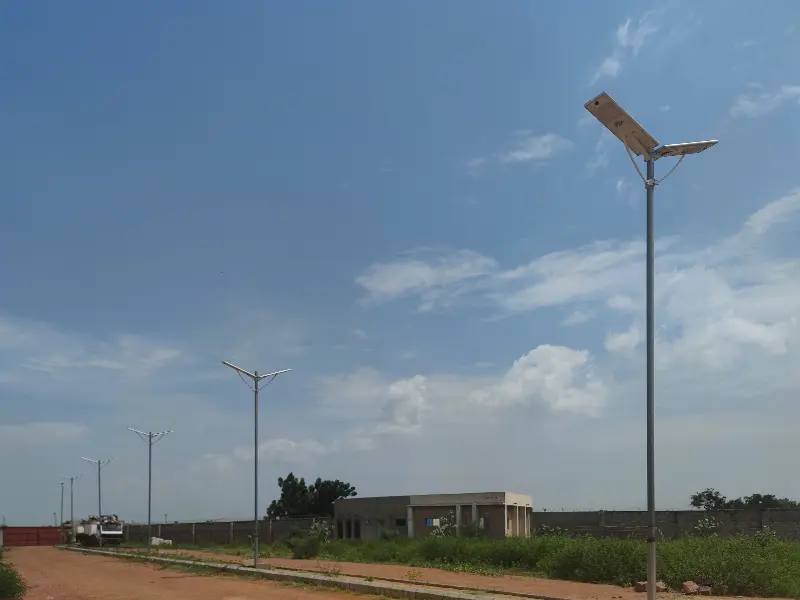
Pourquoi les projets africains ont besoin d'un fournisseur de lampadaires solaires basés sur des projets
L'éclairage hors réseau est pertinent dans les communautés où l'extension du réseau est lente, cher, ou peu fiable. Selon le Conclusions sur les tendances du marché de l’énergie solaire hors réseau de la Banque mondiale, solaire hors réseau fourni 55% de nouvelles connexions électriques en Afrique subsaharienne entre 2020 et 2022.
Entre-temps, le Analyse des énergies renouvelables de l’IRENA et de la Banque africaine de développement identifie les énergies renouvelables comme un élément important de l’accès à l’énergie et de la voie de développement de l’Afrique. Pour un projet d'éclairage public, cependant, la valeur commerciale n'apparaît que lorsque le système fournit l'éclairage requis pendant toute la période d'exploitation convenue.
Donc, un fournisseur qualifié devrait calculer le système au lieu de citer uniquement la puissance imprimée sur le boîtier de la lampe. Le fournisseur doit également comprendre les délais de livraison, conditions de pose, planification des pièces de rechange, et la documentation requise par un EPC ou un acheteur municipal.
Préparez le dossier de projet avant de demander un devis
Un devis utile commence par un brief de projet complet. Sinon, deux fournisseurs peuvent proposer des produits appelés « lampadaires solaires 100 W » tout en proposant des panneaux solaires complètement différents, batteries, Sortie LED, constructions, et les horaires d'exploitation.
1. Définir les exigences en matière de route et d'éclairage
D'abord, fournir la largeur de la route, type de route, hauteur du poteau, espacement des pôles, disposition d'installation, et luminosité requise. Une route d'accès au village, enceinte scolaire, avenue municipale, et les chantiers industriels ne nécessitent pas la même distribution optique.
2. Confirmer le programme de fonctionnement de nuit
Suivant, préciser si la lumière doit fonctionner à pleine luminosité toute la nuit ou utiliser un programme de gradation programmé. Par exemple, un contrôleur peut faire fonctionner la lampe à un rendement plus élevé pendant les heures chargées du soir et réduire le rendement après minuit. Par conséquent, le projet peut équilibrer la luminosité avec l'autonomie de la batterie.
3. Indiquer l’autonomie requise en cas de pluie
En outre, indiquer au fournisseur combien de jours consécutifs de faible ensoleillement le système doit prendre en charge. La capacité de la batterie et la taille des panneaux solaires doivent augmenter lorsqu'un projet nécessite une autonomie plus longue. La configuration finale doit également refléter les conditions solaires locales, météo saisonnière, ombres, et pertes du système.
4. Fournir des informations sur le site et la livraison
Enfin, inclure le pays d'installation, environnement côtier ou intérieur, conditions de vent approximatives, quantité du projet, date de livraison souhaitée, et si les pôles, parenthèses, cages d'ancrage, et des dessins de fondation sont nécessaires. Ces informations aident le fournisseur à évaluer la protection contre la corrosion, conditionnement, chargement du conteneur, et assistance à l'installation.
Lampadaires solaires tout-en-un ou divisés pour les projets B2B
Un fournisseur de lampadaires solaires tout-en-un peut proposer des produits compacts intégrant le panneau, batterie, DIRIGÉ, et contrôleur. Par contre, un lampadaire solaire divisé sépare les principaux composants et permet un dimensionnement plus flexible des panneaux et des batteries. Le bon choix dépend de la vitesse d'installation, échelle du projet, stratégie de maintenance, et exigences de performance.
| type de produit | Projet le mieux adapté | L'acheteur doit vérifier | Principaux risques liés aux achats |
|---|---|---|---|
| Tout-en-un | Routes communautaires, écoles, composés, chemins, et projets nécessitant une installation rapide | Puissance réelle du panneau, énergie de la batterie, Sortie LED, conception thermique, mode contrôleur, et hauteur de montage | Choisir un boîtier compact sans capacité de charge ou de stockage suffisante |
| Système divisé | Routes municipales, autoroutes, des espaces publics plus grands, et projets nécessitant une configuration flexible | Orientation du panneau, taille du câble, boîtier de batterie, structure des poteaux, câblage, et l'exécution de l'installation | Complexité d'installation plus élevée et assemblage sur site incohérent |
| Série de qualité projet | Appels d'offres du gouvernement, Contrats EPC, et des projets avec des exigences définies en matière d'autonomie et d'éclairage | Fichier photométrique, fiche technique, objectif pour les jours de pluie, étendue de la garantie, approbation de l'échantillon, et plan de livraison | Approuver un devis avant la fixation des spécifications techniques |
| Série en gros | Distributeurs nécessitant des modèles reproductibles, prix commercialisable, et un stock gérable | Quantité minimale de commande, continuité du modèle, conditionnement, des pièces de rechange, demande locale, et délai de commande | Acheter trop de modèles similaires ou sélectionner le prix sans tenir compte des retours |
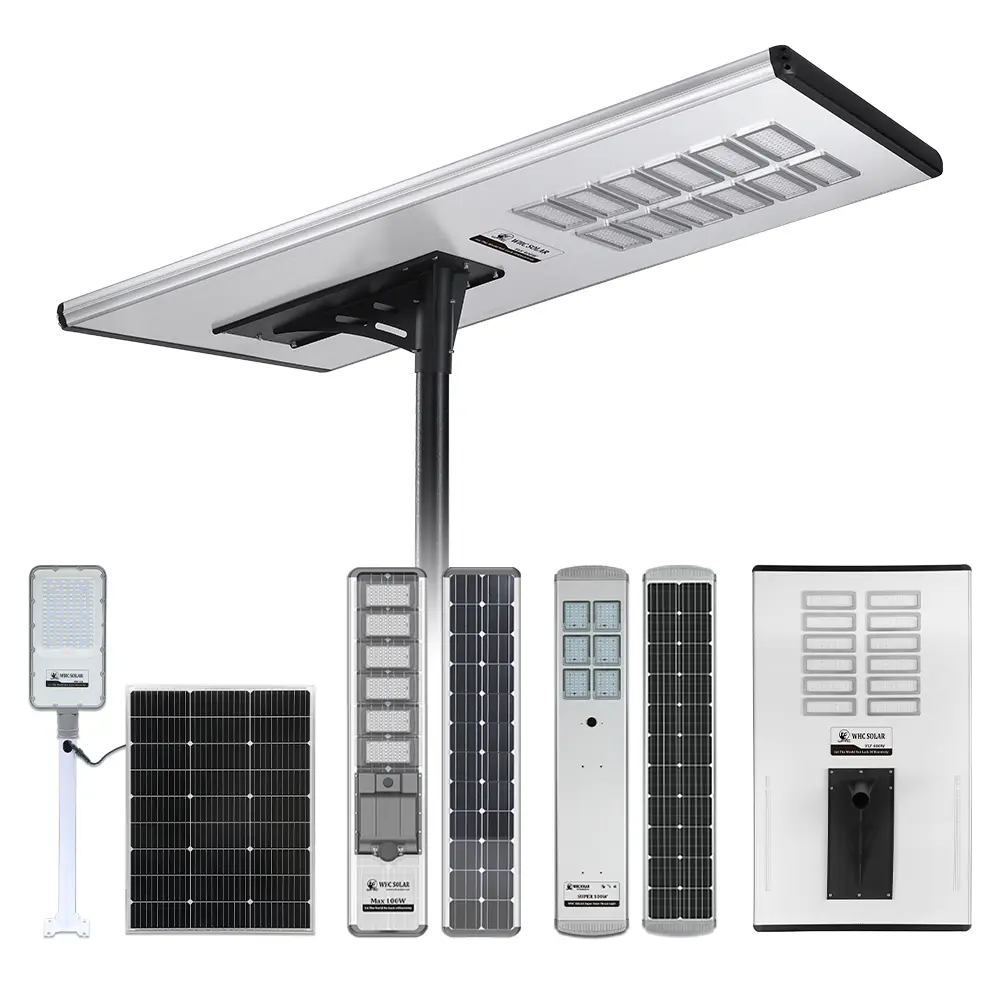
Les matériaux de projet de WHC Solar positionnent la série FLY pour répondre à la demande du projet, avec une plage de sélection de 40 W à 400 W et des configurations conçues pour une prise en charge plus longue des jours de pluie. Entre-temps, Les options COBRA et PSL s'adressent aux acheteurs grossistes qui privilégient les modèles commercialisables, rotation des stocks, et commodité d'installation. Les modèles PB offrent une autre option aux acheteurs pour équilibrer les spécifications du projet et les ventes répétées.
Néanmoins, les noms de séries ne suffisent pas à eux seuls pour l’achat. Les acheteurs doivent demander la fiche technique actuelle car la source LED, capacité de la batterie, taille du panneau solaire, garantie, et l'autonomie peut varier selon le modèle et la configuration. Whc solaire solutions d'éclairage solaire La page fournit un aperçu des structures de système disponibles et des options d'application..
Comment vérifier si les spécifications d'un lampadaire solaire sont réalistes
Une erreur courante en matière d'approvisionnement consiste à comparer uniquement la puissance des LED annoncée.. En pratique, le panneau solaire détermine la quantité d'énergie que le système peut générer, tandis que la batterie détermine la quantité d'énergie utilisable qu'elle peut stocker. Donc, les trois valeurs doivent être vérifiées ensemble.
Étape 1: Estimer la production solaire quotidienne
Utilisez cette formule de sélection initiale: Énergie photovoltaïque quotidienne = puissance des panneaux solaires × heures de pointe d'ensoleillement effectives. Par exemple, un panneau solaire de 140 W avec cinq heures d'ensoleillement efficaces produit 700 Wh théorique par jour avant la recharge, température, poussière, câblage, et pertes de contrôleur.
Étape 2: Vérifiez les exigences de charge de la batterie
Si la batterie citée stocke 960Wh, diviser 960Wh par 140W donne environ 6.86 heures sous la puissance nominale idéale. Parce que les vrais systèmes ont des pertes, le temps de charge réel sera plus long. Par conséquent, un fournisseur doit expliquer si la batterie démarre chaque jour partiellement chargée, si la lampe utilise la gradation, et comment la conception fonctionne pendant des jours nuageux consécutifs.
Étape 3: Calculer la charge nocturne
Suivant, estimation demande énergétique nocturne = puissance LED réelle × heures de fonctionnement × facteur de gradation. Un modèle 120 W annoncé ne fonctionne pas toujours avec une entrée électrique continue de 120 W.. Pour cette raison, les acheteurs devraient demander l'entrée LED réelle, horaire du contrôleur, et performances photométriques au lieu de se fier au nom du modèle.
Étape 4: Ajouter des marges d'ingénierie
Enfin, tenir compte de la profondeur de décharge de la batterie, pertes de conversion, haute température, poussière de panneau, vieillissement, et la lumière du soleil saisonnière. Ce calcul ne remplace pas une conception d'éclairage. Cependant, il expose rapidement les devis qui manquent d'informations pour l'approbation technique.
Classement des priorités d'évaluation des fournisseurs de lampadaires solaires
Pour les achats EPC et municipaux, nous recommandons de classer les fournisseurs par réduction des risques du projet plutôt que par prix unitaire uniquement. L'ordre suivant reflète les problèmes qui affectent le plus directement la mise en service, acceptation, et entretien à long terme.
| Priorité | Point d'évaluation | Preuve à demander | Pourquoi ça compte |
|---|---|---|---|
| 1 | Précision de la configuration | Calcul d'énergie, disposition de l'éclairage, mode de fonctionnement, et hypothèses d’autonomie | Réduit le risque de sous-performance et d’acceptation |
| 2 | Transparence des composants | Puissance du panneau, batterie Wh/Ah, qualité cellulaire, Source LED, manette, matériels, et indice IP | Empêche les noms de modèles trompeurs et les déclassements cachés |
| 3 | Références de projets pertinentes | Pays, quantité, modèle, puissance, images d'installation, et conditions de fonctionnement | Indique si le fournisseur a soutenu des projets comparables |
| 4 | Contrôle de qualité | Dossiers d'inspection, photos de fabrication, test d'échantillon, norme d'emballage, et traçabilité | Améliore la cohérence des lots pour les commandes importantes |
| 5 | Plan de livraison et après-vente | Délai de mise en œuvre, rapport pièces de rechange, processus de garantie, manuels, et procédure de réponse technique | Protège le calendrier EPC et réduit les délais de maintenance |
| 6 | Accompagnement commercial | Quantité minimale de commande, continuité du modèle, conditions du distributeur, plan de conteneur, et supports marketing | Prend en charge les commandes répétées et une rotation des stocks plus saine |

Références réelles du projet d'éclairage public solaire WHC
Les références de projets aident les acheteurs à comparer la structure du produit, quantité, et environnement d'application. Cependant, un cas existant doit être traité comme une preuve d'expérience de livraison plutôt que comme une configuration qui peut être copiée sans analyse du site.
Burkina Faso: 50 Ensembles de lampadaires tout-en-un 60 W
WHC Solar enregistre un 60Projet de lampadaire solaire tout-en-un mural au Burkina Faso en utilisant 50 Unités de la série montante. Ce cas est pertinent pour les acheteurs EPC qui comparent des produits compacts pour une installation plus rapide.
Sierra Leone: 100 Ensembles de lampadaires tout-en-un 30 W
Une autre référence couvre 100 ensembles de lampadaires solaires 30W en Sierra Leone. Pour les distributeurs et les entrepreneurs, le cas démontre un modèle reproductible utilisé pour une plus grande quantité de projet.
Mali: 80W Application d'éclairage routier
Le Projet d’éclairage public solaire WHC au Mali utilise une unité de 80 W avec une batterie LiFePO4 intégrée et un contrôle automatique jour/nuit. Sa page de projet indique une durée de fonctionnement allant jusqu'à 72 heures pour la configuration installée.
Quand même, les acheteurs ne devraient pas sélectionner 30W, 60W, ou 80W uniquement à partir de ces références. Hauteur du poteau, largeur de la route, cible d'éclairage, autonomie, et l'ensoleillement local doivent encore être examinés pour chaque nouveau projet.
Erreurs courantes en matière d'approvisionnement
Achat par puissance nominale: Une grande puissance imprimée ne confirme pas la luminosité ou l'autonomie. Plutôt, comparer l'entrée LED réelle, lumens, distribution optique, alimentation du panneau, et l'énergie de la batterie.
Ignorer le calendrier de contrôle: Deux lampes d'apparence identique peuvent avoir des résultats de fonctionnement différents car l'une d'elles utilise une gradation intelligente. Donc, demander le mode d'éclairage horaire avant approbation.
Comparer les prix avant de fixer les spécifications: Une cotation inférieure peut exclure les poteaux, cages d'ancrage, câbles, des pièces de rechange, ou un emballage plus solide. Par conséquent, le prix unitaire le plus bas peut ne pas produire le coût de projet livré le plus bas.
Ignorer les contrôles d'échantillonnage et de pré-expédition: Échantillons, feuilles de données, détails d'emballage, et les dossiers d'inspection des lots doivent être approuvés avant la production de masse. En outre, Les acheteurs EPC doivent définir la manière dont les composants de remplacement seront fournis.
Utiliser un design pour chaque emplacement: Corrosion côtière, température ambiante élevée, poussière, ombres, géométrie de la route, et les précipitations saisonnières peuvent modifier les spécifications correctes. Par conséquent, les intrants du projet doivent être examinés avant que le modèle final soit confirmé.
Comment WHC Solar soutient les entrepreneurs et les distributeurs EPC
En tant que fournisseur de solutions entièrement solaires, WHC Solar prend en charge les exigences d'éclairage solaire orientées projet et de gros. Pour les acheteurs EPC, le processus peut inclure un examen des contributions au projet, sélection de produits, discussion sur la configuration, confirmation de l'échantillon, planification de l'emballage, et documentation technique.
Pour les distributeurs, la stratégie produit peut se concentrer sur un groupe plus restreint de modèles reproductibles, MOQ pratique, positionnement sur le marché, des pièces de rechange, et réorganiser le support. Entre-temps, les acheteurs de projets peuvent évaluer FLY ou d'autres configurations orientées projet en fonction des conditions routières et des objectifs d'autonomie. Les clients grossistes peuvent comparer COBRA, P.B., PSL, et autres modèles disponibles selon les niveaux de prix locaux et la demande des clients.
Finalement, la configuration recommandée doit être confirmée par rapport à la fiche technique actuelle, quantité commandée, emplacement du projet, et les exigences du contrat.
Conclusion
Un fiable fournisseur de lampadaires solaires devrait faire plus que envoyer un catalogue et un prix unitaire. Le fournisseur doit aider les acheteurs à vérifier les exigences d'éclairage, production solaire, capacité de la batterie, calendrier de contrôle, structure d'installation, preuves de qualité, plan de livraison, et processus après-vente.
Donc, Les entrepreneurs et distributeurs EPC africains devraient comparer les fournisseurs à travers des calculs, références du projet, échantillons, et documentation. Cette approche réduit les litiges techniques et rend le devis final plus facile à évaluer commercialement..
FAQ
Quelles informations dois-je envoyer à un fournisseur de lampadaires solaires?
Indiquer la largeur de la route, hauteur du poteau, espacement des pôles, luminosité requise, heures d'ouverture de nuit, objectif pour les jours de pluie, pays du projet, environnement d'installation, quantité, et délai de livraison. En outre, indiquer si le devis doit inclure les poteaux, cages d'ancrage, parenthèses, câbles, et pièces de rechange.
Les lampadaires solaires tout-en-un conviennent-ils aux projets municipaux?
Oui, ils peuvent convenir aux routes municipales, écoles, composés, et des projets communautaires lorsque le panel intégré, batterie, DIRIGÉ, et le contrôleur répondent aux exigences techniques. Cependant, les routes plus grandes ou plus exigeantes peuvent bénéficier d'une conception divisée avec une plus grande flexibilité de configuration.
Comment les acheteurs peuvent-ils identifier les spécifications surestimées des lampadaires solaires?
Commencez par comparer la puissance des panneaux solaires, heures d'ensoleillement efficaces, énergie de la batterie, entrée LED réelle, temps de fonctionnement, et mode de gradation. Si la production solaire quotidienne ne peut raisonnablement remplacer la consommation énergétique nocturne, demander au fournisseur un calcul détaillé et des données de test.
Quelle série WHC Solar convient aux projets EPC?
FLY et d'autres modèles orientés projet peuvent être évalués pour les exigences EPC, tandis que COBRA, P.B., et les options PSL répondent à différentes priorités de gros et de projets. Néanmoins, WHC Solar devrait confirmer la série finale après avoir examiné le site et les spécifications de l'appel d'offres.
Un entrepreneur EPC doit-il commander un échantillon avant la production en série?
Oui. Un échantillon permet à l'acheteur de vérifier la construction, luminosité, mode contrôleur, méthode d'installation, étiquettes, conditionnement, et documentation. Après approbation, la norme d'échantillon peut également prendre en charge l'inspection des lots avant expédition.
Appel à l'action
À la recherche d'un fournisseur de lampadaires solaires pour une route africaine, école, municipal, commercial, ou projet d'éclairage communautaire? Envoyez à WHC Solar l'emplacement de votre projet, dimensions de la route, hauteur du poteau, horaire d'exploitation, autonomie requise, quantité, et délai de livraison.
Demander une configuration de projet de lampadaire solaire et un devis B2B