
Before inviting bids for commercial rooftop solar procurement, decide which electricity bill the system is meant to reduce. A shopping center may have one meter for common areas and separate utility accounts for its tenants. If those boundaries stay unclear, one bidder may size the array for the landlord’s daytime load while another counts the supermarket and every shop. Both quotes can look complete, but their savings estimates rest on different loads.
Start with a base bid tied to a named connection point and a verified load profile. If the owner wants to include tenants, ask suppliers to price that scope as a separate option and state the approvals it depends on.
Map the meters before sizing a commercial rooftop solar system
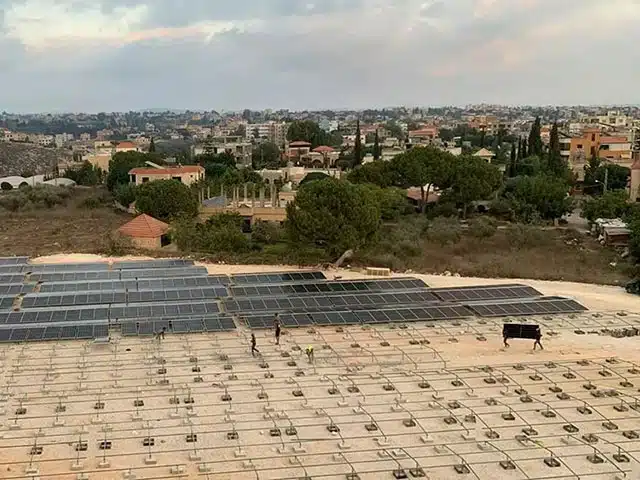
Identify who pays for each load
Collect recent electricity bills, available interval readings and the electrical single-line diagram. Then mark the landlord’s incoming meter, common-area boards, tenant submeters and any tenant accounts billed directly by the utility. Walk through the diagram with the facilities team and confirm which boards serve chillers, lifts, corridors and anchor tenants. Update the bid drawings if field labels and records disagree.
Le NOUS. Green Building Council metering guidance distinguishes utility metering from landlord-installed tenant submetering. Apply that distinction to the site survey. If a tenant has a separate utility account, verify the connection and settlement options before assigning rooftop PV savings to that account.
Agree on roof access and installation responsibilities
Ask who controls each roof area and who can approve access, attachments and shutdowns. Mark plant and skylights, drainage routes, maintenance clearances and areas reserved for future equipment. Then ask bidders to identify cable routes, inverter space, delivery access and work that may interrupt trading. If roof repairs or structural reinforcement could affect the layout, give all bidders the same assumptions and price those works separately.
Compare common-area and tenant-inclusive bids
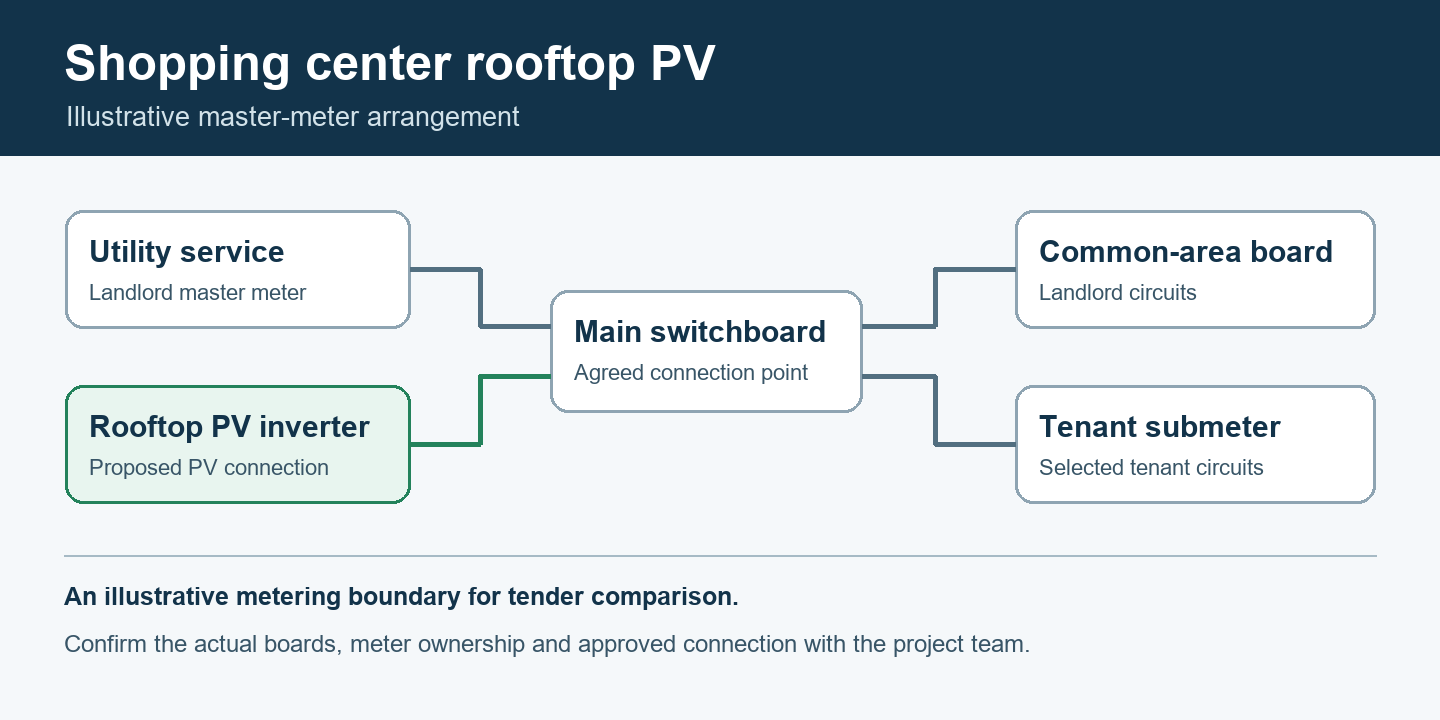
Give bidders the same roof plan and the same load data. Use the following table to define the base bid and the tenant option before the request for quotation goes out.
| Bid option | Connection and load basis | What the quotation must show |
|---|---|---|
| Base bid for common areas | Connect at the agreed landlord board and size against verified common-area daytime demand. | Connection point, generation metering, low-load operation and any export-control equipment. |
| Option for selected tenant loads | Include named tenants under a verified electrical and billing arrangement. | Tenant metering or rewiring, approval dependencies, reporting setup and who administers any agreed allocation. |
The report Expanding Midscale Solar discusses how lease structure and responsibility for utility bills affect solar procurement in commercial properties. Use those questions in tenant discussions and confirm the applicable local requirements before putting any allocation or resale arrangement into the tender.
Two shopping center scenarios and what to buy
Nigeria scenario with separate utility accounts
Consider a shopping center where the landlord pays for corridor lighting, ventilation and shared services. The anchor supermarket has its own utility account. Dans ce cas, ask bidders to size the base system against the landlord’s verified daytime loads. If the owner wants the supermarket to participate, request a separate proposal that shows the connection route and the approvals required before including its consumption in the savings estimate.
Ghana scenario with a landlord master meter and tenant submeters
Consider a center with one utility meter and several landlord-managed submeters. The owner wants to include selected tenants in the bid. D'abord, confirm which circuits are downstream of the master meter. Suivant, settle how the owner will document and report any agreed savings. Ask the EPC to include meter locations, data access and a sample report in the commercial offer.
Par exemple, if a proposed array is delivering 150 kW AC and the loads within the agreed boundary draw 95 kW at that moment, 55 kW remains to be exported, stored or curtailed, ignoring losses and other constraints. These are illustrative numbers. Ask bidders to model the same daytime load intervals, including low-occupancy periods, before comparing annual self-consumption.
What to require in a commercial rooftop solar procurement package
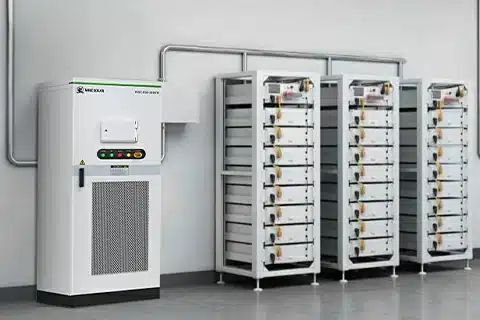
Separate equipment prices from site work
Ask each solar inverter supplier or EPC to list module count and DC capacity in kWp, inverter model and AC output in kW, mounting system, protection, meters and monitoring. Also require separate prices for cable routes, switchboard changes, roof works and commissioning. When considering a hybrid option, use the WHC Solar commercial system overview to frame the PV, inverter and storage scope. Tie any storage option to a distinct requirement such as backup for agreed common-area loads.
For a public equipment reference, le WHC Solar commercial project case library lists a Sierra Leone system with 54 modules rated at 550 W each and a 30 kW hybrid inverter. That works out to 29.7 kWp of module capacity alongside 30 kW of inverter output. Require this level of detail in every offer. To compare available inverter families, start with the WHC Solar inverter range and confirm the exact model against the project specification.
Set the acceptance criteria before awarding the order
Agree who will check meter readings and import and export direction. Where the project requires an export limit, include a low-load functional test and define what the contractor must document. En outre, specify the handover package. It should include the as-built single-line diagram, final meter register, monitoring access and responsibility for investigating discrepancies after handover.
Close the commercial rooftop solar procurement review with two documents that every bidder has priced against: an agreed metering diagram and a written schedule of inclusions and exclusions. Use them to resolve differences before issuing the purchase order.
Foire aux questions
Can roof area alone determine the PV system size?
Roof area sets a physical limit. Also check daytime loads at the proposed connection point, electrical capacity and any approved export limits.
Can a tenant submeter automatically assign solar savings?
A submeter records energy at its measurement point. An agreed method for allocating savings also depends on the meter arrangement, contracts and applicable local requirements.
Should the base bid include battery storage?
Use the same PV scope for the base comparison. Request a separately priced storage option when the site has a defined backup or energy-shifting requirement.
What should every bidder submit?
Request a roof layout, single-line diagram, equipment schedule, generation assumptions, connection scope, exclusions and a commissioning plan.
How should we compare forecast savings?
Use the same load data, tariff assumptions, operating hours and export rules for every quote. Ask each bidder to show how much solar generation the site is expected to use within the agreed metering boundary.
Request a shopping center solar configuration
Share your roof plan, single-line diagram, recent electricity bills and the meters or circuits you want the project to serve. Contact WHC Solar for a project configuration and quotation for your shopping center.