
A distributor can have lamps ready for sale but no approved battery for an older installation. That gap delays repairs and creates repeat site visits. Choosing a solar street light supplier therefore means checking replacement support before placing bulk orders. Your street light spare parts plan should connect each installed model to an approved component, repair procedure and replenishment route.
This guide focuses on equipment already sold or installed. It explains how African distributors can evaluate battery replacement, compare repair options and plan after-sales inventory without assuming that similar-looking parts are interchangeable.
Start with the Installed Base, Not a Generic Parts List
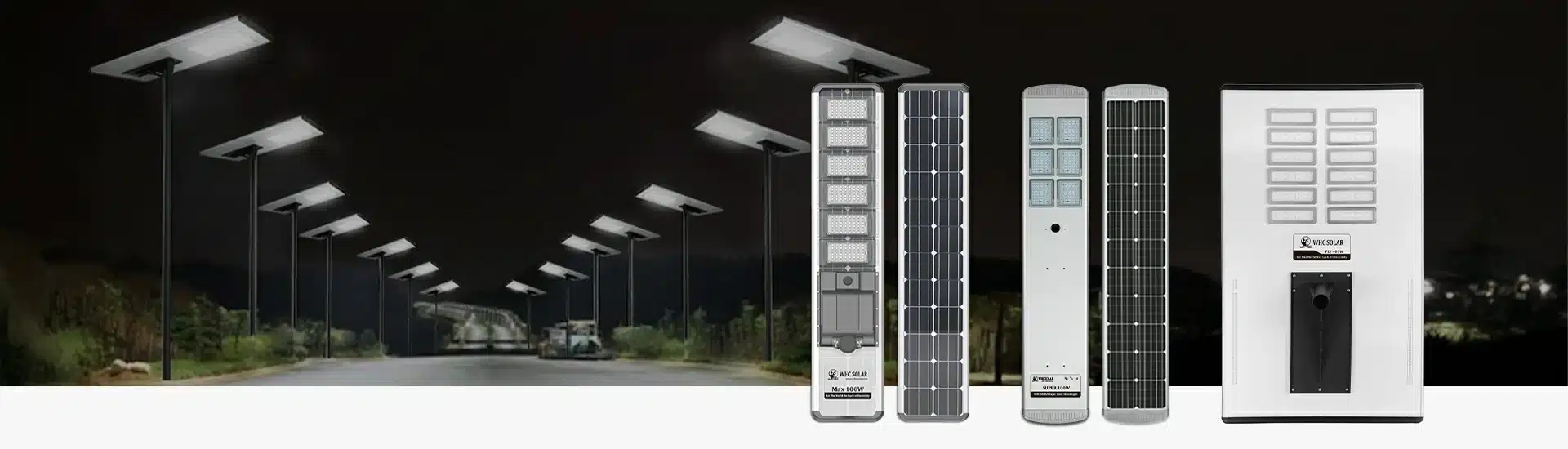
WHC product materials distinguish several street-light series, including COBRA, PSL and FLY. Treat these as separate product families until the supplier confirms otherwise. A shared brand or similar housing does not establish battery, controller or mounting compatibility.
Build an installed-base register with the lamp model, serial number, purchase batch and installation date. Add battery and controller identifiers where available. Separate units in your warehouse from units operating in the field. Then record which components the manufacturer authorizes technicians to replace.
استخدم WHC street-light product range to identify relevant products, but request a model-specific service list for the equipment you actually own. A current catalogue alone cannot confirm compatibility with an earlier production revision.
Battery Replacement Requires More Than Matching Capacity
Check Electrical and Mechanical Compatibility
For solar street light battery replacement, ask for the approved battery assembly code. Confirm chemistry, nominal voltage, سعة, protection arrangement and controller charging requirements. Also check dimensions, mounting points, connector type, pin assignment and polarity.
Equal energy does not mean equal compatibility. For illustration, 3.2V × 80Ah and 12.8V × 20Ah both equal 256Wh. لكن, these hypothetical packs have different voltages and cannot be substituted simply because their energy matches. These figures are calculation examples, not WHC replacement specifications.
Ask whether the replacement includes the required protection board, wiring and mounting hardware. Avoid buying loose cells as a shortcut unless the manufacturer explicitly authorizes that service method. Battery work should follow the approved procedure and be performed by qualified personnel.
Confirm Access, Sealing and Warranty Conditions
An integrated lamp is not automatically field-serviceable. Review the integrated lighting range, then confirm how the specific model is opened and resealed. Request instructions covering replacement seals, cable entries and checks before returning the lamp to service.
ال اللجنة الانتخابية المستقلة 60529 enclosure protection standard describes IP classifications. It does not prove that an opened and repaired lamp retains its original protection. Obtain the manufacturer’s repair requirements rather than relying on the original product label.
Compare Street Light Spare Parts with Complete-Lamp Replacement
Select the repair route using compatibility evidence, technician capability and total restoration cost. A cheap component is not economical if it requires another site visit or leaves the enclosure improperly sealed.
| Service option | Evidence required before ordering | Distributor decision |
|---|---|---|
| Approved battery assembly | Exact part code, electrical ratings, connector details and authorized replacement procedure. | Consider when diagnosis confirms a battery fault and the lamp is otherwise serviceable. |
| Approved controller assembly | Battery and PV compatibility, LED output requirements, settings and hardware revision. | Order only after confirming the fault and the required configuration. |
| Seals, cables or brackets | Model-specific drawings, dimensions, materials and installation requirements. | Stock approved items that support authorized repairs; do not improvise safety-critical fittings. |
| Complete replacement lamp | Pole fit, lighting performance, operating schedule and installation compatibility. | Compare when component repair is unsupported, damage is extensive or restoration time is critical. |
Compare the landed part cost, repair labor, access equipment and testing with the complete-lamp option. Keep warranty entitlement separate from this comparison: coverage depends on the written terms and evidence for the affected unit.

Ask Your Solar Street Light Supplier for a Service Matrix
Request one matrix linking each lamp model and production revision to approved street light spare parts. It should identify order codes, supplied accessories, replacement instructions and any restrictions on local repair.
For each item, confirm the minimum order quantity, quotation validity and replenishment lead time. Clarify whether a superseded part has an approved replacement. Ask how the supplier will notify you about connector, firmware or assembly changes.
Also separate technical response time from delivery time. A remote diagnosis may be quick while an approved component still needs manufacturing and transport. Document who handles diagnosis, warranty authorization, freight and the final service report. Discuss these requirements through WHC’s service support channel before making commitments to your customers.
Set Reorder Levels from Verified Parts Consumption
Do not apply one spare-parts percentage to every model. Start with recorded, diagnosed component replacements. Complaint counts alone are unreliable: تظليل, incorrect settings or installation damage can produce symptoms that resemble battery failure.
A basic planning rule is: reorder point = expected consumption during replenishment lead time + safety stock. Use consistent time units and calculate each approved part code separately.
على سبيل المثال, assume a distributor uses two approved battery assemblies per month. With a three-month replenishment lead time and a reserve of two assemblies, the illustrative reorder point is eight. This is not a WHC failure-rate estimate or stocking recommendation. Actual demand variability, shipment delays and supplier availability must determine the final reserve.
When ordering, review usable stock, confirmed incoming quantities and parts already allocated to repairs. Keep damaged or unverified batteries outside available inventory. Follow the manufacturer’s storage conditions and review shelf time before adding more stock.

Adapt After-Sales Stock to Three African Distribution Scenarios
Regional Dealers Serving Nigerian Estate Installations
As a typical planning scenario, dealers may support several installation batches through different local installers. Prioritize model identification and an approved battery-controller pairing. A central diagnosis record can prevent repeat visits caused by ordering the wrong assembly.
Ghanaian Distributors Supporting School and Community Lighting
For dispersed sites, access and technician travel affect repair costs. Compare authorized component replacement with a complete-lamp reserve. Collect identification photos before dispatch, and ensure the technician has the correct seals and instructions.
Central African Channels with Long Replenishment Routes
Where replenishment is slow or variable, review reserves against actual delivery history. Agree on support for older models before expanding the range. A smaller supported portfolio may be easier to service than many unrelated lamp revisions.
These are typical procurement scenarios, not claims about named WHC customers or completed projects.
Keep Claim Evidence and Battery Returns Organized
Create a service record containing the serial number, invoice reference, installation date, symptom description and relevant photographs. Include controller settings or diagnostic readings only when requested and obtained through an approved procedure.
Record the diagnosis, authorized action and installed replacement code. This makes repeat faults easier to investigate and keeps warranty claims traceable. Never treat swollen, leaking or otherwise damaged batteries as ordinary parcels; obtain handling and transport instructions from qualified specialists.
ال GOGLA e-waste toolkit provides guidance relevant to responsible end-of-life handling. Arrange suitable collection and recycling routes instead of allowing replaced batteries to accumulate indefinitely.

خاتمة: Buy a Supported Range, Not Just More Lamps
A solar street light supplier should be evaluated on model-specific replacement support as well as initial product configuration. Plan street light spare parts around verified compatibility, authorized repairs and realistic replenishment. This gives distributors a clearer basis for customer service and repeat purchasing.
الأسئلة المتداولة
Can different street-light series share replacement batteries?
Only with written manufacturer approval for the exact models and revisions. Similar dimensions or capacity do not establish electrical compatibility.
Should every complaint trigger a battery order?
لا. Use approved diagnosis first. Charging conditions, إعدادات, wiring or other components may explain the symptom.
How many replacement parts should a distributor stock?
Base quantities on diagnosed consumption, replenishment lead time and service commitments. There is no universal percentage suitable for every installed base.
Does opening a lamp affect warranty coverage?
Check the applicable written terms before repair. Confirm who is authorized to open the enclosure and which procedure must be followed.
What should be included in a spare-parts quotation request?
Provide lamp models, serial or batch references, installed quantities, approved part codes where available, required quantities and destination.
Request a Model-Specific After-Sales Supply Plan
Send your model list, label photographs, installed-base quantities and recent service records to WHC Solar’s contact team. Request confirmation of available street light spare parts, replacement conditions, minimum order quantities and lead times before finalizing your next distributor order.