
A wholesaler can stock several solar street light models and still lose orders because the available configurations do not match local projects. One model may be too small for a wide road, while another may consume too much inventory capital for estate lanes or school compounds. Effective street light SKU planning starts by selecting an الكل في واحد مورد ضوء الشارع بالطاقة الشمسية using more than the wattage printed on a quotation.
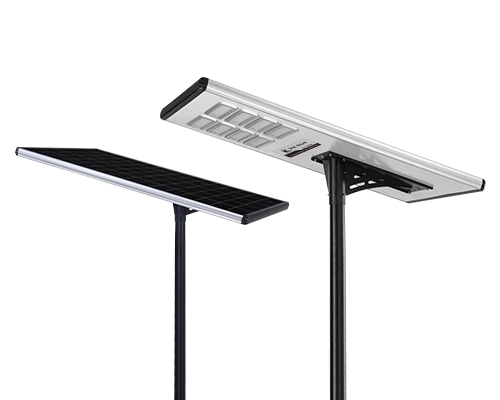
A practical stock plan connects the luminaire, لوحة شمسية, بطارية LIFEPO4, controller and mounting conditions. It should also reflect the projects that local installers quote most often. This street light SKU planning guide explains how African wholesalers can build that plan around pole height, عرض الطريق, ساعات العمل, rainy-season autonomy and supplier documentation.
How a Supplier Should Support Street Light SKU Planning
A supplier should not recommend a product only from a requested wattage. The same nominal wattage can produce different project results because LED efficiency, التوزيع البصري, وضع التشغيل, battery capacity and solar-panel output may differ.
Before selecting products from a مورد ضوء الشارع بالطاقة الشمسية, classify incoming inquiries by application. Record the road or compound width, proposed pole height, pole arrangement, nightly operating schedule, required autonomy and expected order quantity.
This creates a repeatable street light SKU planning process. Local installers can provide better project information, while the wholesaler can identify which models should be stocked and which configurations should remain project-specific orders.
Street Light SKU Planning: Build the Matrix From Six Project Inputs
The following screening table helps wholesalers translate customer inquiries into product categories. It is not a substitute for a photometric calculation or an approved project design.
| Project Input | Questions to Ask | SKU Planning Impact | Risk if Ignored |
|---|---|---|---|
| Road or area geometry | What is the road width? Is the installation single-sided, staggered or opposite? | Determines the optical distribution and likely output class. | Dark areas or unnecessary product oversizing. |
| Pole height and spacing | What mounting height and distance between poles does the project require? | Affects beam coverage, uniformity and luminaire selection. | Bright spots below poles with dark gaps between them. |
| Lighting requirement | Is the priority road visibility, pedestrian safety, security or general compound lighting? | Separates road-project models from general-area products. | A high wattage label without suitable illumination. |
| Nightly operating profile | How many hours are required at full or reduced output? | Defines controller mode and daily battery-energy demand. | The light switches off before morning. |
| Solar resource and autonomy | What is the installation location and required cloudy-day reserve? | Changes solar-panel and battery-capacity requirements. | Repeated low state of charge during poor weather. |
| Service and stocking model | Will installers need spare controllers, brackets or replaceable battery components? | Defines spare-part inventory and product standardization. | Long after-sales delays for a small component failure. |
Check Energy Balance Before Stocking by Wattage
An all-in-one solar street light integrates the panel, بطارية, controller and LED luminaire into one assembly. The compact design simplifies installation, but it also means that the main components must be balanced as one system.
A preliminary energy check begins with:
Daily LED energy demand = operating power × equivalent full-power operating hours
If a controller reduces output after midnight, equivalent full-power hours will be lower than total operating hours. The supplier should provide the actual lighting program instead of describing the product only as “dusk to dawn.”
Panel sizing must consider the project’s solar resource and system losses. Battery sizing must consider the operating schedule, allowable depth of discharge, temperature and required cloudy-day autonomy. Wholesalers should request these values for every model and avoid treating one autonomy claim as valid for every African location.
ال WHC solar lighting solutions range includes integrated and split configurations. This allows a distributor to compare compact products for repeat sales with more configurable products for project-specific requirements.
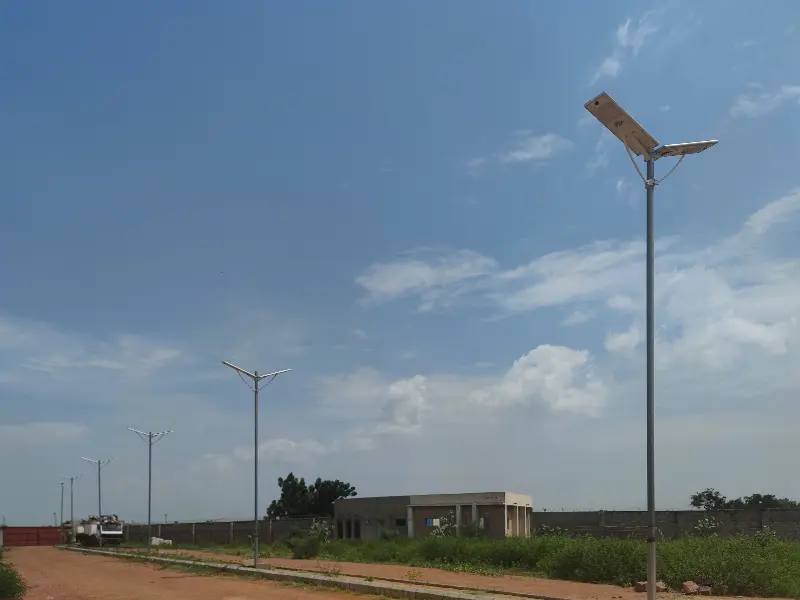
Use Pole Height and Road Width as Screening Inputs
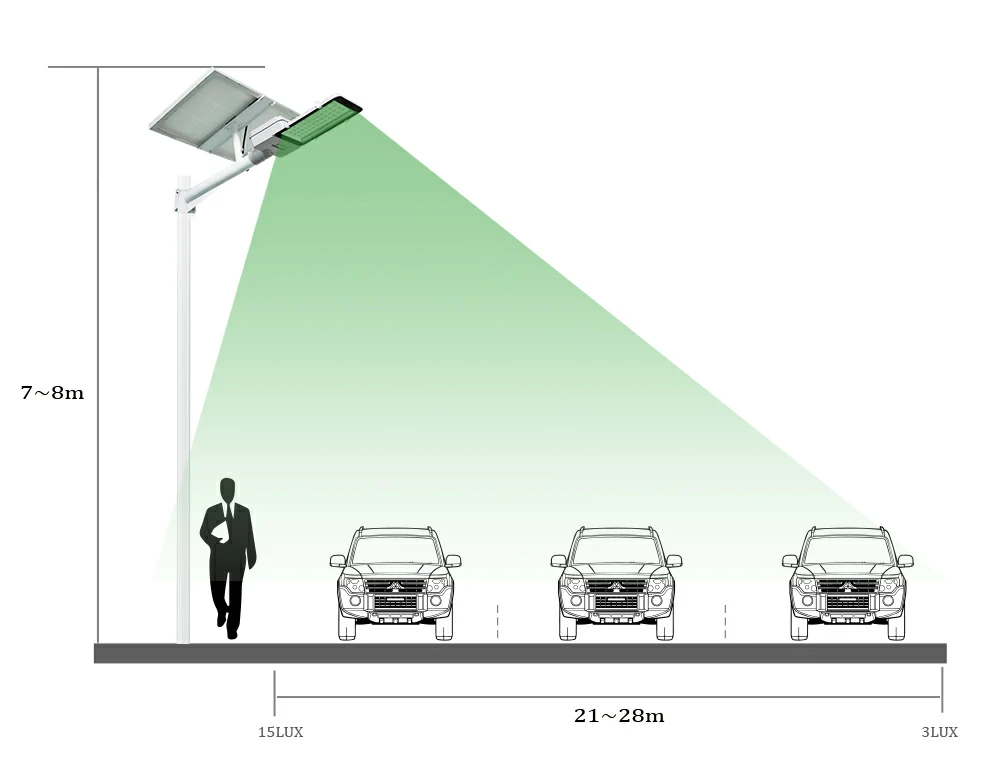
Pole height and spacing cannot be converted into a universal wattage chart. Road classification, luminaire optics, surface reflectance, traffic, pedestrian activity and installation arrangement all affect the result.
CIE 115:2010 uses lighting classes based on the visual task and considers parameters such as traffic and environmental conditions. A project should therefore define a lighting requirement before the distributor promises a particular spacing.
One WHC BRT-50W reference calculation illustrates the process. The simulation used an 8-metre mounting height, 15-metre pole spacing and a double-row opposing arrangement for two 8.5-metre carriageways. The calculation reported approximately 18 lux average illuminance and 13 lux minimum illuminance on each roadway evaluation field.
These figures are a reference result for that specific luminaire file and geometry. They are not a standard spacing recommendation for every 50W product. Before using them in a tender, the supplier should verify the current photometric file, road layout, light-loss factor and required lighting class.
أ World Bank street-light procurement guide also recommends defining illumination, تباعد القطب, luminaire type and dimming or time-of-night operation in project design guidance. These are useful fields for a wholesaler’s inquiry form.
Plan Different SKUs for Three Common African Applications
Local Roads and Estate Lanes
These inquiries often prioritize straightforward installation and repeatable layouts. Stock products should cover the most common local pole and roadway conditions, but installers still need to confirm road width, spacing and required operating mode. Do not classify every narrow road as the same project.
Town Roads and Contractor Tenders
Public or contractor-led projects usually need stronger documentation. Keep products with available photometric files, technical datasheets, installation drawings and clear component specifications in the project range. ال WHC solar street light case library can help buyers review the difference between all-in-one and split-light applications, but each new tender still requires its own design checks.
المدارس, Factories and Commercial Compounds
Compound lighting may combine entrance roads, pedestrian areas, loading zones and perimeter security. One SKU rarely covers all four. A practical quotation may use different optical or power classes while keeping the controller family, installation method and spare parts consistent.
Compare Supplier Documentation, Not Only Unit Price
For wholesale purchasing, request a model-level comparison rather than one promotional specification. The commercial file should identify:
- LED operating power and luminaire output
- Solar-panel rated power and electrical data
- Battery chemistry, voltage and rated capacity
- Controller program and available dimming modes
- Required autonomy and the assumptions behind it
- Housing material, ingress protection and installation method
- Photometric files and recommended application boundaries
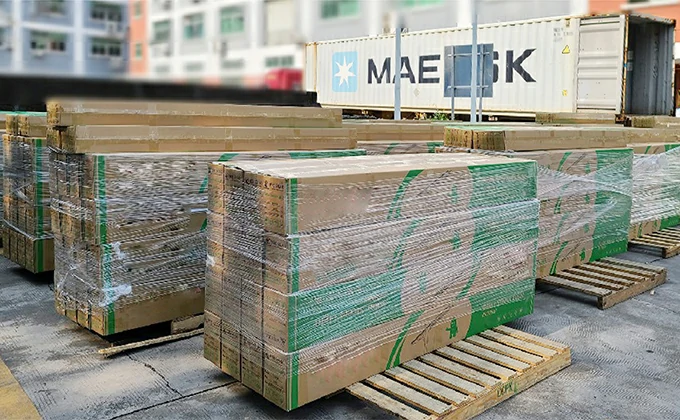
- Carton dimensions, unit weight and container-loading information
- Spare-parts policy and technical support process
Wholesalers should also ask whether different models share controllers, brackets or service procedures. Standardized components can reduce the number of spares and simplify installer training.
Build a Profitable Range With WHC Solar
WHC Solar presents multiple solar lighting product formats for distributor and project demand. The aim of a mixed order should be controlled coverage: repeat-sale models for common applications, supported by documented project models for wider roads and formal tenders.
Send WHC Solar the expected order quantity, target applications, pole heights, road widths, operating schedule and autonomy requirement. The team can then help compare available configurations and prepare a B2B quotation instead of recommending products from wattage alone.
Use the صفحة الاتصال WHC للطاقة الشمسية to request a street light SKU planning matrix, project configuration review and wholesale quotation.
Frequently Asked Questions
How many solar street light models should a new wholesaler stock?
The number should follow recurring local applications, not the size of the supplier’s catalogue. Start with models that cover common roads, compounds and installer budgets, then keep specialized tender configurations as project orders.
Can pole height determine the required street light wattage?
لا. Pole height is only one input. Road width, تباعد, التوزيع البصري, target illuminance, uniformity, surface conditions and pole arrangement must also be considered.
How should cloudy-day autonomy be compared?
Ask for the battery capacity, lighting schedule, controller strategy, planned depth of discharge and solar-resource assumptions behind the claim. Do not compare autonomy numbers without their test or design conditions.
Is an all-in-one solar street light suitable for every road project?
لا. All-in-one products are useful where compact installation and standardized supply are priorities. Wider roads, unusual layouts or demanding tenders may require a different optical design or a split configuration with more flexible component sizing.
What should an African wholesaler send when requesting a quotation?
Provide order quantity, project type, بلد التثبيت, عرض الطريق, ارتفاع القطب, تباعد القطب, nightly operating schedule, autonomy target, required documents and preferred delivery schedule.