
Two hybrid inverters with the same advertised power can require different batteries, accessories and installation arrangements. African solar installers comparing Deye vs Growatt hybrid inverters should therefore begin with the exact models and the customer’s operating needs. Brand reputation alone cannot confirm backup performance or battery compatibility.
This comparison uses Deye’s SUN-3–12K-SG05LP3-EU-SM2 and Growatt’s WIT 4–15K-HU as reference families. Both are three-phase, low-voltage battery options. Start with corresponding 10 kW models, then verify the supplied revision and country-specific documentation before ordering.
Deye vs Growatt: compare equivalent equipment first
Do not compare a low-voltage Deye model with a high-voltage Growatt model and assume their battery requirements are interchangeable. De même, distinguish continuous output, backup output and grid passthrough ratings.
The following manufacturer-published family features provide a starting point. They do not establish local availability, installation approval or performance for every model and operating mode.
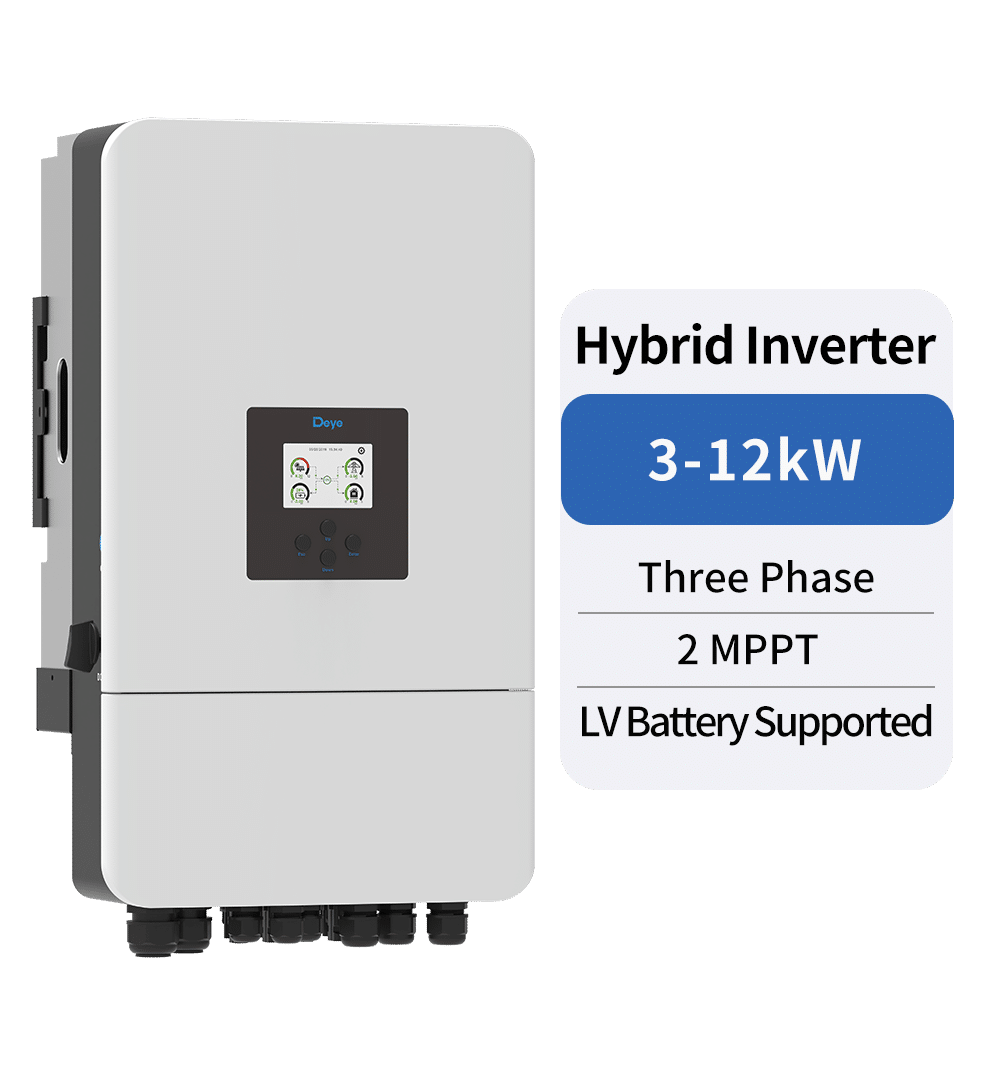
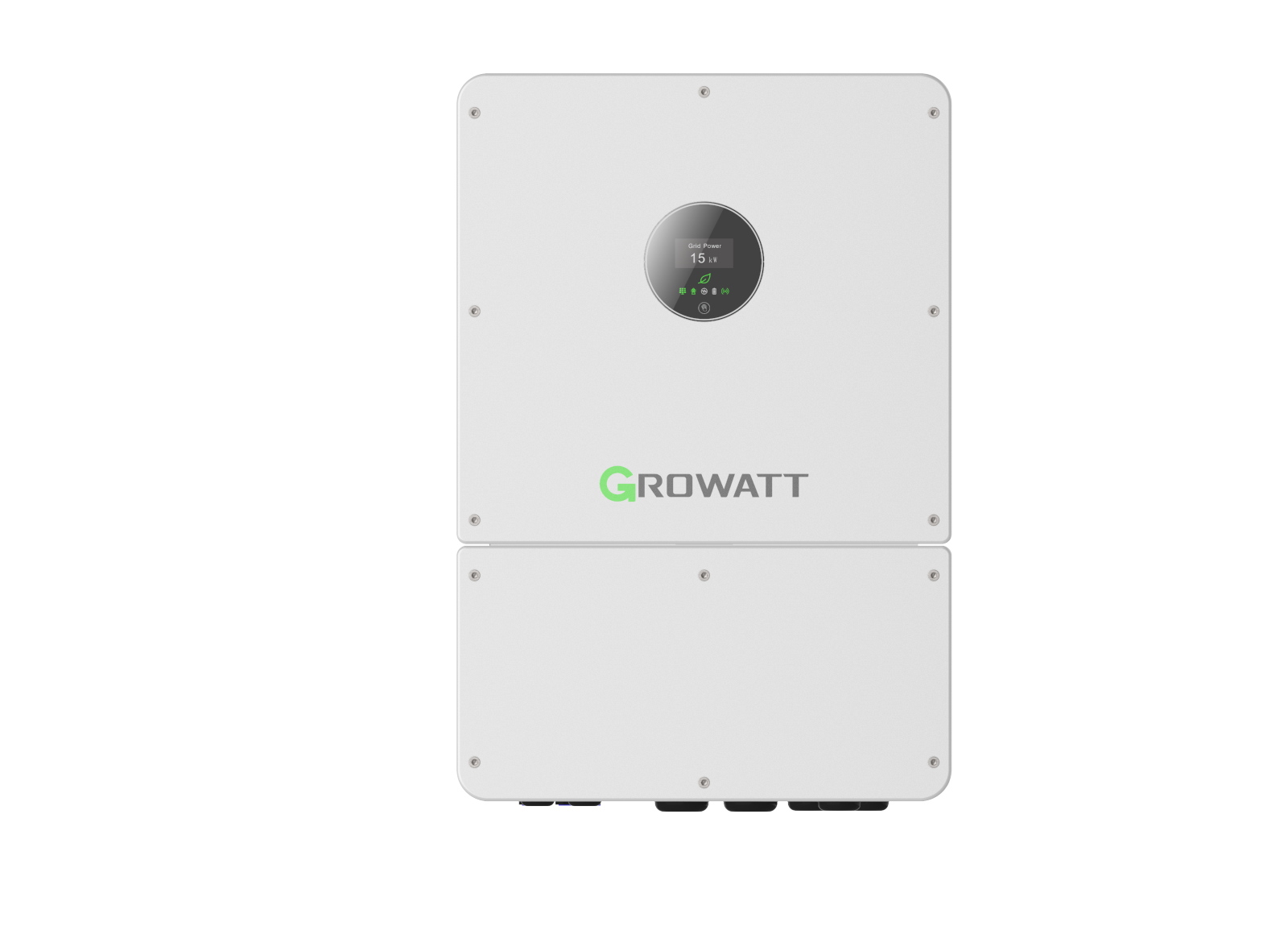
| Comparison point | Deye reference family | Growatt reference family | Purchasing implication |
|---|---|---|---|
| Product scope | SG05LP3-EU-SM2; 3–12 kW, triphasé, low-voltage battery. | WIT-HU; 4–15 kW, triphasé, low-voltage battery. | Match the actual power class and battery architecture. |
| Unbalanced output | Published allowance up to 50% of rated power per phase. | Published allowance up to 50% of rated power per phase. | Check per-phase limits and the intended operating mode. |
| Generator-related feature | Published support for storing generator energy. | Published integrated generator input. | Verify the approved connection, controls and charging limits. |
| Enclosure rating | IP65 in the reviewed specification. | IP66 on the reviewed product page. | Neither rating establishes flood or coastal-corrosion suitability. |
| Lithium battery matching | Confirm exact battery, BMS protocol and firmware. | Confirm exact battery, BMS protocol and firmware. | A shared voltage category does not prove compatibility. |
Battery matching can change the practical result
D'abord, compare the inverter’s battery current limit with the battery bank’s permitted continuous and peak currents. Include the BMS, câbles, protection and approved number of battery modules in that assessment.
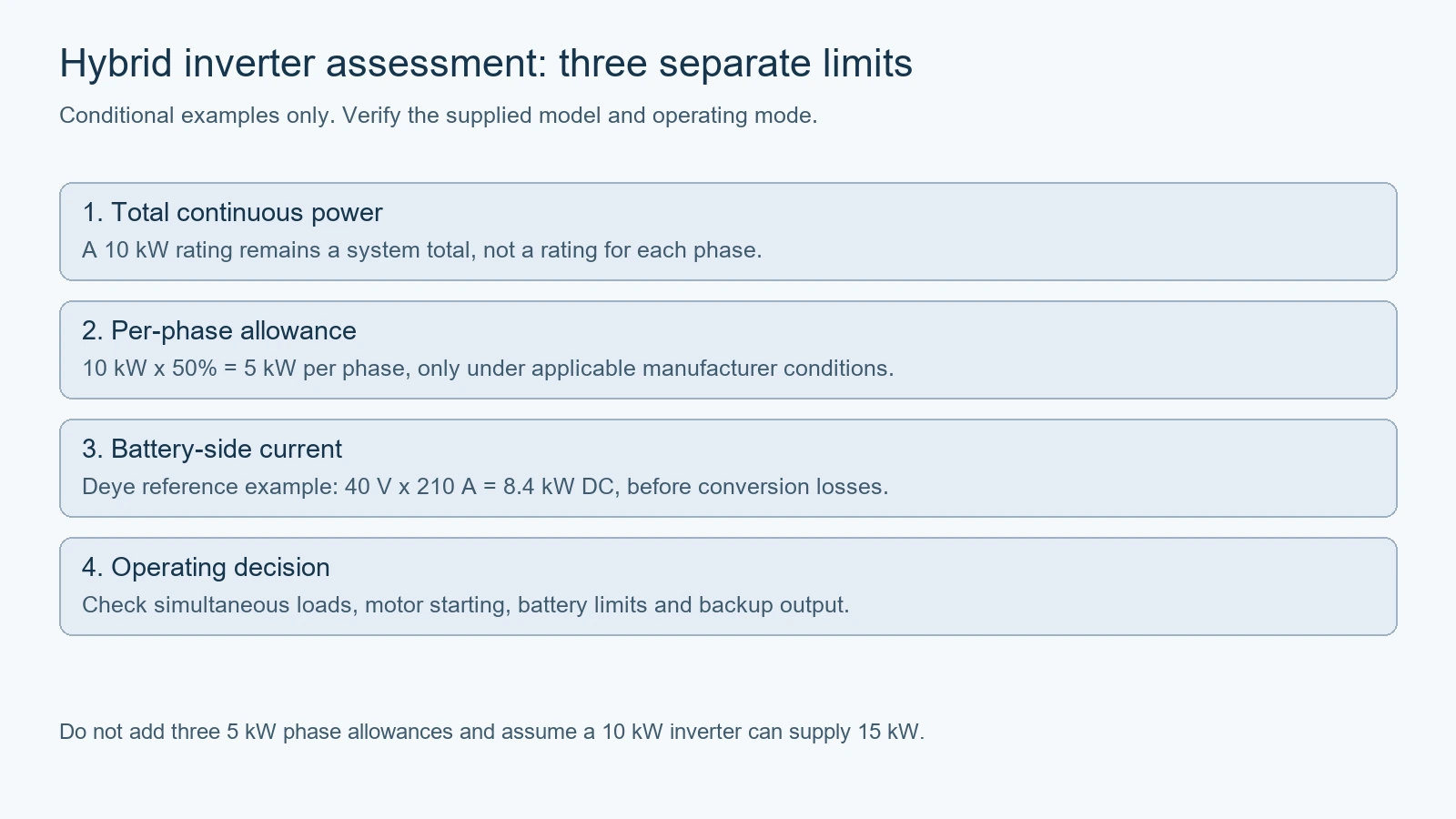
Par exemple, the reviewed Deye SUN-10K-SG05LP3-EU-SM2 datasheet specifies a 40–60 V battery range and a 210 A maximum charge/discharge current. À 40 V, 210 A represents 8.4 kW of DC power before conversion losses. Par conséquent, un 10 kW nameplate does not guarantee 10 kW of battery-only AC output throughout the voltage range.
Apply the same current-and-voltage check to the exact Growatt model. Do not substitute the largest current advertised for its entire family. Also request written compatibility confirmation for the proposed battery and firmware.
Illustrative scenario: a distributor’s installer network in Ghana
A distributor already stocking one battery model should ask both suppliers to confirm that exact combination. A cheaper inverter may create extra costs if it needs another battery platform, additional communications hardware or different protection equipment.
When reviewing WHC Solar’s options d'onduleurs hybrides, use the same matching checklist. This comparison does not establish that WHC supplies, represents or guarantees either reviewed brand.
Check backup loads by phase and starting demand
Suivant, list the loads assigned to each phase. A three-phase total can hide a heavily loaded single phase, while motors may demand substantially more current during starting.
For a 10 kW reference model, a published 50% per-phase allowance corresponds to a 5 kW ceiling under the manufacturer’s applicable conditions. It does not mean all three phases can each supply 5 kW simultaneously.
The US Department of Energy’s inverter and grid-services overview explains that outage operation requires an inverter system designed for that function. Confirm the actual backup circuit and operating limits.
Illustrative scenario: a workshop in Nigeria
A workshop with lighting, computers and motor-driven equipment should identify which machines must operate during outages. Compare starting requirements, per-phase loading and transfer performance before choosing either brand. Sensitive equipment may require separate continuity provisions.
Compare PV inputs and generator operation
For both candidates, check the proposed modules against maximum DC voltage, MPPT operating range, operating current and permitted short-circuit current. Connector count is not the same as independent tracker count.
En outre, distinguish permitted connected PV capacity from the power the inverter can process. Different datasheet labels should not be treated as equivalent without checking their definitions.
Generator integration needs a separate review of voltage, fréquence, capacité disponible, load priority and charging settings. A generator-related feature does not prove compatibility with every existing generator or guarantee fuel savings.
Illustrative scenario: a small commercial compound in Senegal
An installer combining different roof orientations with an existing generator should request a proposed string layout and operating sequence. Compare both brands against that same design brief, rather than buying the unit with the larger headline PV figure.
Compare the complete quotation and service route
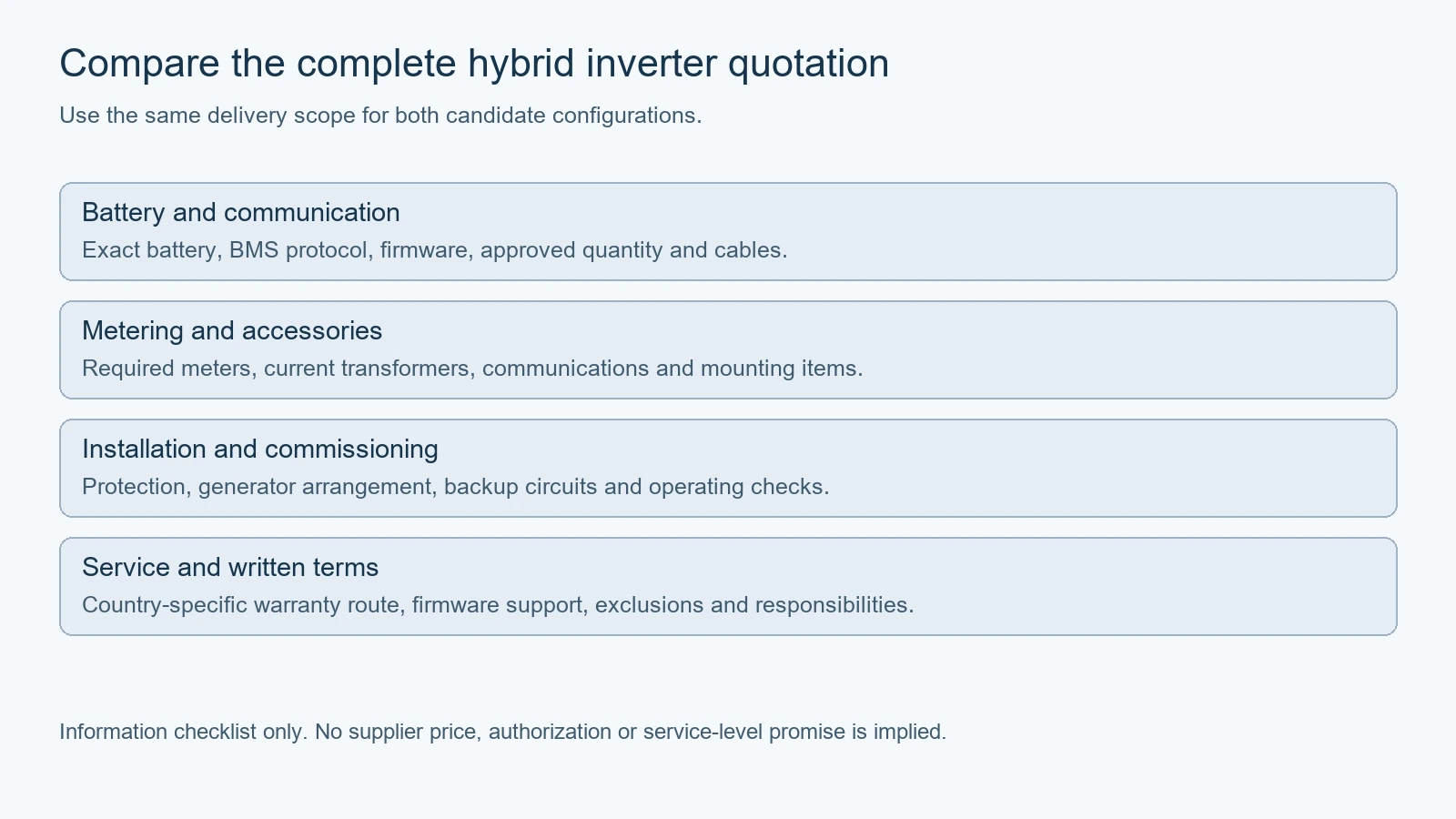
Avant de commander, align the included meters, current transformers, communications devices, protection, mounting items and commissioning scope. Also ask who provides firmware support and handles warranty claims in the installation country.
Request written terms for the exact serial-number channel. Neither overseas reviews nor a global warranty headline establishes local stock, replacement time or labour coverage.
The Department of Energy’s solar and resilience guidance treats backup as a coordinated system task. Donc, evaluate the complete package rather than the inverter enclosure alone.
Whc solaire solutions solaires commerciales provide a starting point for discussing a separately specified system proposal. Ask for written component and compatibility details for any offered package.
Questions fréquemment posées
Is Deye better than Growatt for every African project?
No universal winner follows from the brand name. Compare the exact models against the site’s loads, batterie, environment and support arrangements.
Can both brands use the same lithium battery?
Possibly, but only after checking the exact inverter, batterie, protocol and firmware combination. Low-voltage classification alone is insufficient.
Does a hybrid inverter automatically provide UPS performance?
Non. Verify transfer behaviour and the connected equipment’s tolerance. Some loads may need a separate UPS.
Does IP66 make Growatt the better coastal choice?
Not by itself. Evaluate corrosion evidence, emplacement d'installation, refroidissement, connectors and the applicable warranty for both products.
Should installers choose the lower-priced quotation?
Compare equal delivery scopes first. Include batteries, required accessories, commissioning and the documented service route.
Turn the comparison into a matched project specification
Deye vs Growatt hybrid inverters should be compared using the same load profile and complete system requirements. Select the documented configuration that fits the project, rather than declaring one brand best for every site.
Contacter WHC Solaire with your load list, phase arrangement, détails de la batterie, roof layout and backup requirements to discuss a project-specific solar configuration and B2B quotation.